

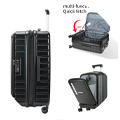




Luggage Categories Explained: A Practical Guide to Suitcase Types, Sizes, and Materials
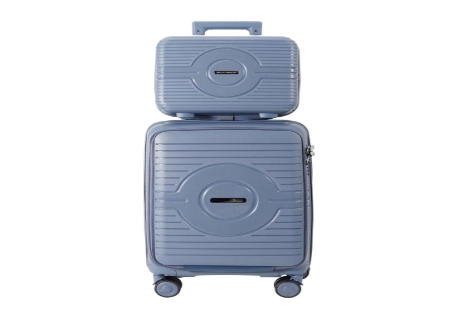
Selecting luggage involves far more than simply deciding on a preferred color or locating the cheapest option. Today, travelers carefully evaluate cabin restrictions, checked bag costs, and empty weight. They also assess available packing space, wheel performance, handle durability, and overall material toughness before making a purchase. Retailers and travel brands face an even tougher task. They must assemble a luggage collection that properly addresses various journeys, financial plans, and consumer groups.
At Pengteng, we manufacture luggage to meet these distinct demands. Our broad selection features fabric luggage, ABS luggage, PC+ABS luggage, PP luggage, PVC luggage, and essential luggage accessories. Through our luggage products, service support, and OEM/ODM solutions, we assist buyers in developing clearer and highly functional product lines.
Why Luggage Categories Matter More in 2026
The term “luggage” encompasses numerous distinct items. A small carry-on case, a massive checked suitcase, and a softside business bag might exist within the exact same industry. However, they resolve completely different issues. Well-defined product categories allow travelers to make smarter decisions. Furthermore, these divisions allow brands to present their collections with greater clarity.
Airline baggage policies likewise increase the necessity for proper classification. Travelers constantly need to confirm if a specific bag is allowed inside the cabin. They also need to determine its total holding capacity. Moreover, they must figure out if the complete external dimensions might trigger additional fees. Consequently, luggage size and specific product type are now tightly linked.
Airline rules affect product selection
Countless travelers frequently ask, “what size suitcase can you carry on a plane?” There is absolutely no universal answer for every single flight path. This happens because airline regulations fluctuate considerably. As a basic guideline, numerous airlines enforce carry-on limits roughly around 56 × 45 × 25 cm. This measurement includes the wheels and handles. Buyers must consistently verify the precise airline policy prior to departure.
For luggage brands, this situation establishes several strict product requirements:
-
Compact outer dimensions
-
Low empty weight
-
Smooth and stable wheels
-
Strong but lightweight handles
-
Clear size information
-
Practical internal capacity
A proper carry-on suitcase must remain simple to lift. It also needs to be easy to position inside overhead storage bins. Conversely, a checked suitcase requires expanded capacity alongside superior physical protection.
Clear categories reduce buying confusion
Internet shoppers frequently abandon a product page whenever the exact size or intended use appears ambiguous. Implementing a straightforward category structure easily resolves this exact issue. Brands can efficiently organize products by:
-
Travel purpose
-
Size
-
Shell type
-
Material
-
Capacity
-
Price level
-
Customer group
At Pengteng, we apply this logical approach whenever assisting buyers in planning their collections. A budget-friendly ABS luggage line might perfectly accommodate infrequent travelers. Meanwhile, PP or PC+ABS luggage can be targeted toward consumers who travel much more frequently.
Main Luggage Categories for Different Trips
Before finalizing a material or accessory, buyers must determine exactly how the suitcase will operate. The total trip duration, chosen transport method, personal packing habits, and anticipated baggage handling all influence the correct product decision. The subsequent categories supply a highly practical starting point for both everyday travelers and professional product planners.
Carry-on luggage
Carry-on luggage is specifically built for brief excursions and direct cabin travel. It typically arrives in 18-inch, 20-inch, or specific 22-inch dimensions. A standard carry-on case provides roughly 35-50 L of interior space. However, the ultimate capacity relies heavily upon the external shell shape and the internal organizational structure.
A good carry-on suitcase should be:
-
Light before packing
-
Easy to lift
-
Small enough for common cabin rules
-
Smooth to roll through airports
-
Organized with straps or dividers
Fabric luggage can work well for travelers who need front pockets and flexible storage. Lightweight ABS, PP, or PC+ABS luggage can also suit compact cabin collections.
Checked luggage
Checked luggage is larger and is placed in the aircraft’s baggage system. Common sizes include 24 inches, 28 inches, and larger formats. These cases need stronger wheels, handles, corners, zippers, and shell construction because they are exposed to more handling.
A 24-inch suitcase often provides about 60-70 L of space. A larger 28 inches bag may offer around 80-100 L. The best choice depends on the journey, packing style, and airline weight limit.
Luggage sets
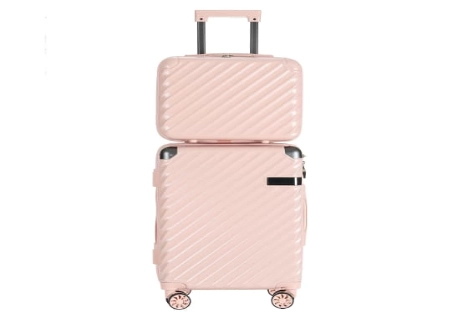
Luggage sets usually combine different sizes for different travel needs. A 20 24 28 inch luggage set is popular because it covers short, medium, and long trips in one collection.
For retailers, luggage sets offer several benefits:
-
A simple product story
-
More options for different customers
-
Better shelf presentation
-
Opportunities for bundle sales
-
Easier color and design coordination
A suitcase set fabric collection is a great choice. It helps buyers who want easy packing. These users also like having outside pockets. Moving the bags around takes less effort.
Luggage Materials and Their Best Uses
The material changes the weight and shape of a bag. It also impacts the overall strength. The surface look and the retail cost change too. One perfect option does not exist for all buyers. Picking the right one relies on the item’s main goal. It must also match what the target market wants.
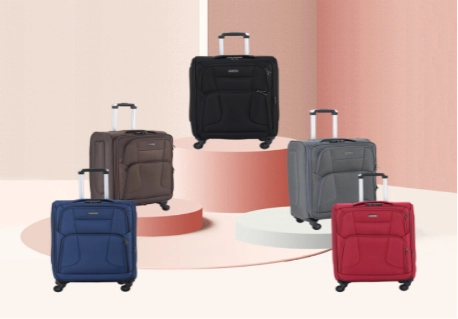
Fabric luggage
Fabric luggage is highly useful and bends easily. These bags usually feature front pockets. They also have areas that grow larger. The main body feels quite soft. This design fits perfectly for work trips. It is also good for brief weekend getaways. Buyers like it when they need fast access to papers or small devices.
Users can store fabric luggage without trouble. It fits nicely into small areas. Still, buyers need to look at a few details. They must check the cloth strength first. The water-resistant coating is important too. Zipper quality and smooth wheels matter a lot. Strong corners are another key point. Customers should review these features before picking a specific model.
ABS luggage
ABS luggage shows up frequently in budget hard shell lines. Factories shape it without much trouble. The material takes on many distinct colors. It fits nicely for basic items and standard luggage sets. This makes it a smart pick for folks who travel rarely. It also suits retail plans where cost is a major focus.
Buyers want reliable daily results. Therefore, they must look past just the outer shell. The wheel bases play a big role. Pull rods and corner styles matter too. The inside cloth is another vital part. Finally, thorough quality checks strongly affect the final item.
PC+ABS luggage
PC+ABS luggage serves as a great middle ground. It gives a nicer look than standard ABS. At the same time, the cost stays fair. This reaches a larger group of buyers. Many people pick this material for work trips. Families use it for vacations too. It fits perfectly into medium-tier store collections.
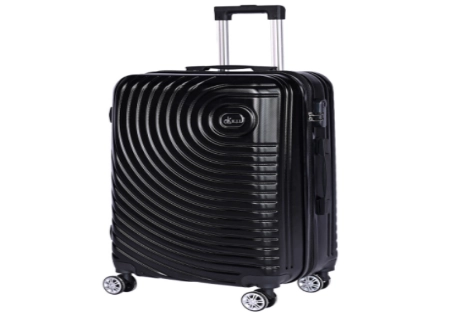
A rough surface finish does something else useful. It helps build a scratch proof luggage product. Tiny marks blend in better here. They do not show up as clearly as they do on very shiny bags.
PP luggage
PP luggage is lightweight and flexible. Its ability to bend under pressure can make it suitable for frequent handling and checked travel. It is often chosen by buyers who want a lighter hard shell with good impact performance.
The complete structure still matters. Shell thickness, molded ribs, wheel support, pull rods, and corners all influence how the suitcase performs after repeated use.
PVC luggage
PVC luggage can suit buyers who value easy cleaning, practical pricing, and a distinctive surface appearance. It may work well in selected travel collections and value-focused product lines.
At Pengteng, our product range allows buyers to compare fabric, ABS, PC+ABS, PP, PVC, and other luggage options for different markets.
How Size and Weight Influence the Buying Decision
Luggage size should always be considered together with empty weight and usable capacity. A large suitcase may hold more, but it can also become difficult to lift when full. A small suitcase may be easy to carry, but it may not provide enough room for a long trip.
24 inch suitcase weight and 24 inch maleta size
The 24 inch maleta size is generally considered a medium suitcase. It is suitable for several days of travel and often offers about 60-70 L of capacity. A typical 24 inch suitcase weight may be around 3.5-4.5 kg, depending on the material, lining, wheels, handle, and lock.
This size is popular because it offers a useful balance. It is larger than a carry-on but easier to manage than a large checked bag.
Trolley bag sizes
Trolley bag sizes are usually discussed by height, but buyers should check the complete external dimensions. A suitcase’s wheels, side handles, top handle, corner guards, and pockets can all add to its final size.
A simple product line may include:
-
18-20 inches: compact travel
-
22 inches: larger cabin-style use
-
24 inches: medium checked travel
-
28 inches: large checked travel
-
32 inches: extra-large packing with higher oversize risk
How are suitcases measured?
How are suitcases measured? Measure the height, width, and depth of the complete suitcase. Include wheels and handles. For airline travel, the external size usually matters more than the internal shell measurement.
Clear measurement information helps customers avoid misunderstandings. It also helps brands reduce returns caused by incorrect expectations.
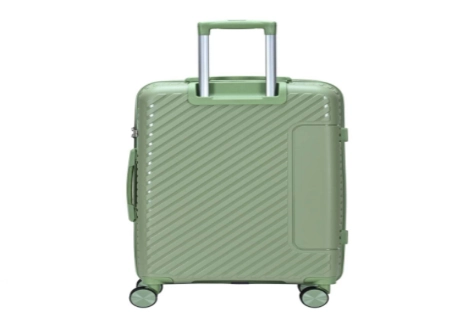
Why Luggage Accessories Complete the Product
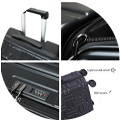
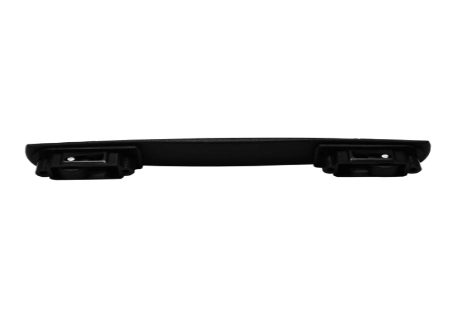
A suitcase does not perform through its shell alone. Luggage accessories determine how the product moves, opens, closes, and feels in daily use. Wheels, pull rods, handles, locks, zippers, and corner parts can influence both customer satisfaction and product life.
Wheels and handles
Suitcase wheels should roll smoothly under a realistic load. Handles should feel comfortable and stable when the bag is full. Large cases need stronger hardware because they carry more weight.
When buyers select luggage accessories, they should consider:
-
Load-bearing performance
-
Noise level
-
Wheel stability
-
Handle strength
-
Pull rod movement
-
Replacement availability
Surface protection and scratch resistance
Scratch proof luggage is attractive to frequent travelers because airport handling can leave visible marks. A textured shell may hide small scratches better than a smooth glossy surface. However, surface finish is only one part of durability. Corners, wheel bases, and shell thickness also matter.
At Pengteng, we consider the relationship between shell material and luggage accessories when developing products. This helps create luggage that is easier to use and easier for brands to position.
How Pengteng Supports Luggage Buyers
Pengteng works with brands, wholesalers, importers, retailers, and private-label buyers. We help customers choose materials, sizes, colors, accessories, interior layouts, logos, and packaging according to their target market.
Our service page covers support such as product development, quality inspection, sample coordination, and shipping communication. Through our OEM/ODM service, buyers can develop luggage for different price levels and travel scenarios.
A complete luggage collection may include:
-
Fabric luggage for flexible packing
-
ABS luggage for value-focused products
-
PC+ABS luggage for balanced performance
-
PP luggage for lightweight durability
-
PVC luggage for practical daily use
-
Luggage accessories for stronger product support
Conclusion
Luggage categories help both travelers and businesses make better decisions. Carry-on luggage is designed for compact travel, while checked luggage provides more space for longer journeys. Fabric luggage offers flexibility. ABS luggage supports affordable collections. PC+ABS luggage balances appearance and performance. PP luggage is light and flexible, while PVC luggage can provide practical value and easy care. Size matters too, from compact trolley bag sizes to 24 inch medium cases and large 28 inches bag options. At Pengteng, we bring materials, accessories, sizes, and customization together to help buyers build luggage collections that fit real travel needs.
FAQs
Q: What size suitcase can you carry on a plane?
A: Usually 20-22 inches, about 35-50 L, subject to airline rules.
Q: What is the average 24 inch suitcase weight?
A: Usually around 3.5-4.5 kg.
Q: How much can a 28 inches bag hold?
A: Approximately 80-100 L.
 consult
 WHATSAPP
 leave message
 top