





Why Airlines Are Gate-Checking Carry-Ons Even With Empty Overhead Bins
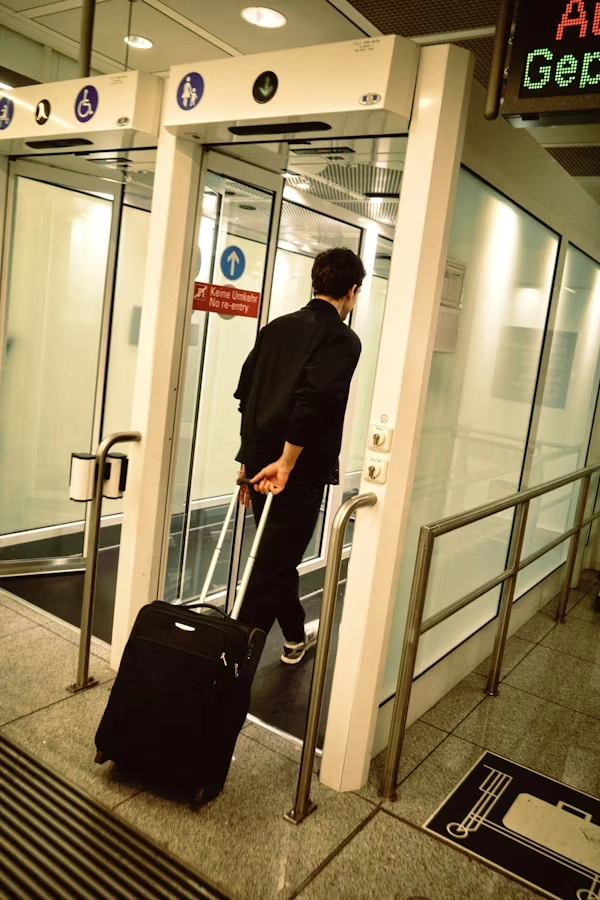
Empty overhead bins do not always mean that your carry-on luggage will be stowed away safely in them. Often, even when all overhead bins are empty, your carry-on could be gate-checked. If you are a frequent traveler or are purchasing a piece of luggage for your next big trip, it would be helpful to know the reasons behind an airline’s luggage policy and how cabin space is managed in accordance with the airline’s luggage rules.
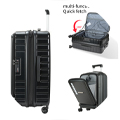
We specially design our luggage in line with airline’s height & weight restrictions for a carry-on so even if an airline is enforcing gate check for carry-ons, you will be able to board with your Pengteng luggage smoothly.
Airline Luggage Rules: A Quick Overview
Airline luggage policies are not as simple as many might believe. Not only does the airline look at the overhead bin space on the plane, but also at how many people are on the flight, the type of plane, and the airline’s own operational style. To that end, they will gate check carry-on luggage in order to leave on time and minimize delays during the boarding process.
It is common for people to assume that an empty bin is theirs for the taking. However, many airlines’ policies for the carry-on luggage of their passengers include circumstances under which items stowed in the overheads will be gate-checked. This can be due to uneven distribution of space in the overheads or simply running out of time to stow the luggage before the gate closes.
When are airline baggage rules applied? Even when there are spare overhead bins airline baggage rules regarding size of carry-on, of personal items and of checked baggage are mostly always applied. These rules are typically standard for all flights of one type of aircraft but can be subject to change on a per flight basis. The main thing to avoid gate checking of your carry-on bag is to check in advance that it complies with the maximum dimensions as laid down by the airline in question.
Why Gate-Checking Happens Even With Empty Bins
Gate-checking luggage and personal items is done for several operational and safety reasons. Understanding these reasons can better inform travelers when choosing carry-on luggage and personal items for their trip.
Boarding Efficiency and Safety
Gate-checking, helps to speed up boarding. Even if bins are empty, the airline may require certain items of your carry-on luggage to be checked at the gate.
-
Cabin load is balanced to avoid narrow aisle situations.
-
Avoiding uneven weight distribution in overhead bins
-
Boost boarding for very crowded flights
Travelers with oversized carry-on bags or a number of carry-on bags that in aggregate exceed the space in the overhead bins benefit from gate checking which is a safe and efficient process.
Cabin Space Optimization
To manage empty bins in the aircraft cargo holds the airlines use bin space management. Even if a bin seems to be empty when a passenger brings luggage to be stowed, the airline staff anticipates other passengers joining later in the boarding sequence. To rule out any problems for these passengers, the luggage is gate-checked and in line with the airlines’ baggage policy.
Aircraft Type and Capacity Considerations
A typical regional aircraft has limited space for stowage of carry-on luggage in the overhead bins. This may look like there is space available in some bins, but it is typical for an airline to insist on gate checking of carry-on luggage if it does not comply with the dimensions for carry-on luggage, in order to facilitate efficient handling of both the passenger’s personal items and the luggage that has been checked as baggage.
Selecting the Right Carry-On Luggage for Travel
Avoid having your carry-on bag gate-checked by choosing the right bag in the first place. Here at Pengteng we design bags that are within airline size restrictions and are designed to be able to be stacked and stowed in the cabin as efficiently as possible.
Features to Look For
What to look for when purchasing luggage for air travel.
-
For the carry-on size, measure the length, width, and depth to correspond with airline specifications.
-
Light-weight design: Low weight for easy handling.
-
Durable material: Stows gate-check or overhead storage contents safely during flight.
-
Storage compartments that expand to fit more when needed: Storage that does not set a ceiling on the amount of storage that can be used.
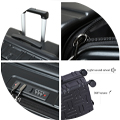
An example for such luggage would be our ABS trolley carry-on luggage. It has a big packing space while still being within the usual dimensions for a carry-on. Also the sturdy construction of this suitcase protects well from any possible damage if it gets gate-checked.
Personal Items and Cabin Storage Tips
In addition to carry-on bags, most airlines allow you one personal item such as a small back pack, tote, or even a laptop bag. By strategically packing your items into your two bags you can save yourself the headache of having to check a bag at the gate.
-
Use compression packing cubes to get the most space out of your carry-on luggage.
-
Distribute weight evenly to avoid overloading bins
-
Refer to the airline’s specific bag dimension measurements for both your carry-on & personal items.
Our soft-shell backpacks are designed to fit under an airline seat, while having ample room to store all of your electronics, papers, and other travel necessities in multiple pockets and compartments.
How Airlines Communicate Luggage Policies
Many airlines inform about their gate-checked bag policy in pre-flight e-mails, boarding passes and in their mobile apps. Also, please note the luggage rules of your airline to find out if your carry-on luggage will have to be gate-checked as well.
Key points to remember:
-
Size and weight of a carry-on bag is critical. Baggage that is too large to be considered as a carry-on could be subject to gate checking.
-
Gate-checking may occur even if all overhead bins appear to be fully filled.
-
Some boarding groups have different allowances for personal items and for carry-on luggage, etc.
Choosing the right luggage within airline’s baggage policy will help travelers save time, avoid surprises at the boarding gate and have a more hassle-free flight.
Why Pengteng Luggage Supports Stress-Free Travel
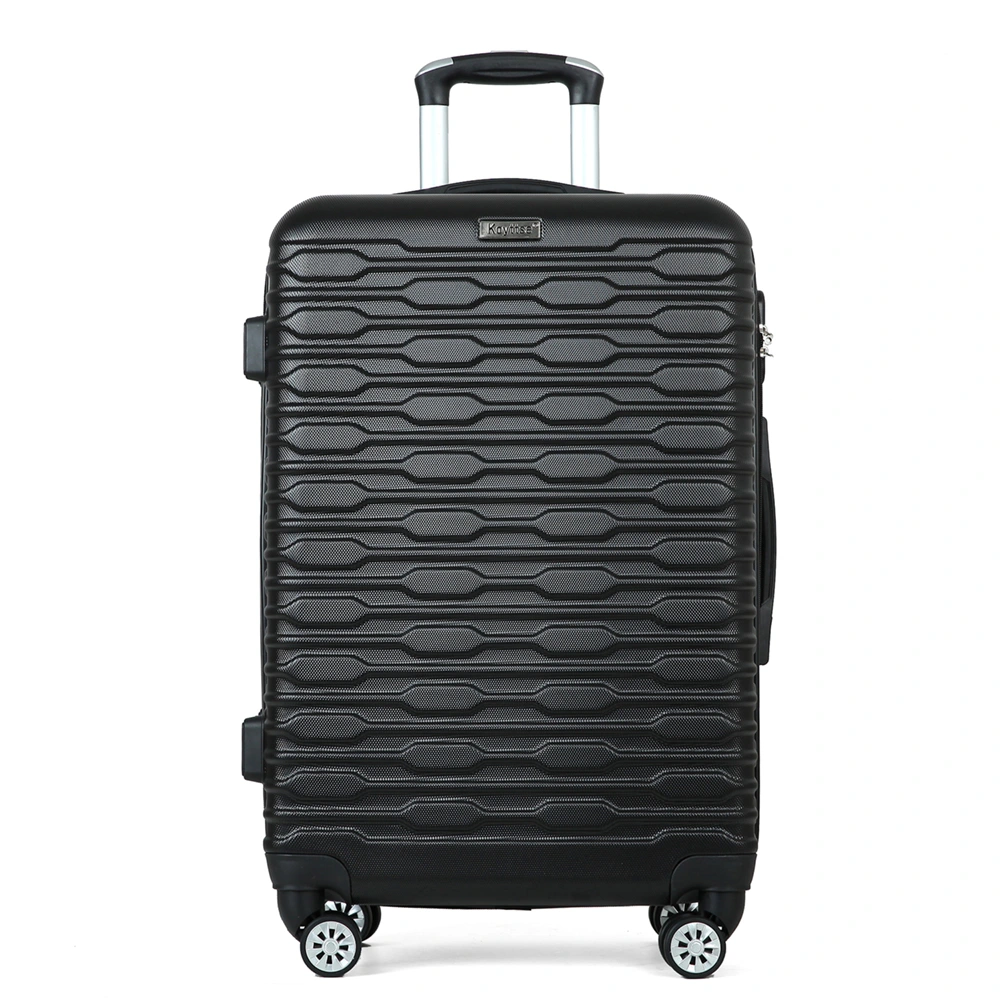
Pengteng understands that every traveler needs a bag that can travel with them to their destinations, meeting the airline’s requirements and reducing stress for the traveler. Our luggage pieces are carefully designed and produced according to the following principles.
The 3-piece ABS luggage set is the perfect travel set for the frequent flyer. The suitcase can be used for short as well as long distance flights. Due to the dimensions and weight of the suitcases, they can easily be used as carry-on luggage on most flights.
Managing Overhead Bin Congestion
Even if your luggage is of correct size, the overhead storage bins can fill up quickly. Learn how to avoid having to gate check your luggage.
-
Board early to secure bin space
-
Use a personal item for quick-access items
-
Avoid overpacking multiple carry-on luggage pieces
-
Consolidate smaller items to reduce bin clutter
Recent Trends in Airline Luggage Enforcement
As airlines continue to fine-tune their luggage policy, several developments are emerging and influencing these policy changes. Efforts to increase airline efficiency, health measures put in place by the airlines as a result of the COVID-19 pandemic, and an upswing in air travel by passengers across the globe are all factors currently shaping the luggage policy of the airlines.
Understanding of current trends helps travelers pick the right carry-on luggage that complies with most airlines’ requirements and doesn’t get sent to gate-checking.
Conclusion
Gate-checking your carry-on luggage is not merely a matter of overhead bins not being available on the plane. Rather, it is an operational decision, and by understanding how airlines manage luggage, choosing the right-sized carry-on, and packing your personal items in an organized manner, you can avoid having to gate-check your carry-on.
Our Pengteng Luggage collection will save you time and effort in researching airline luggage policies. Our ABS trolley sets, Softshell Luggage Backpacks and 3-piece luggage sets are not only durable and made to last as well as offering comfort when in use.
FAQs
Q: What is the standard size for a carry-on?
A: The standard size for most airlines is 22″ x 14″ x 9″ (56cm x 36cm x 23cm).
Q: Can my personal item be gate-checked?
A: Yes, if for reasons of lack of space in the cabin your personal item cannot be taken into the cabin it will be asked to be collected at the gate.
Q: Are gate checked bags handled differently than checked baggage?
A: No. Gate checked bags are treated the same as checked baggage, with the only difference being that you receive your bag at the gate on arrival as opposed to at the baggage claim.
 consult
 WHATSAPP
 leave message
 top
top