





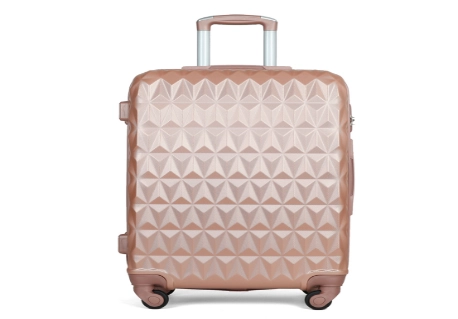
Luggage Accessories Guide: How Small Parts Improve the Whole Travel Experience
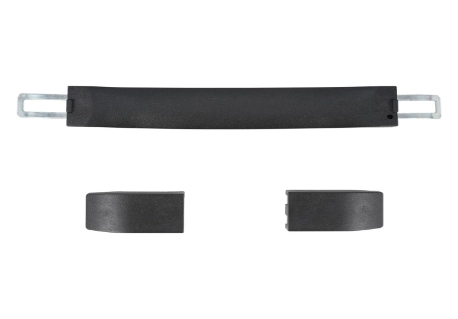
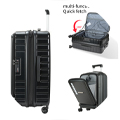
Luggage accessories might seem minor. However, they truly determine the overall feel of a suitcase during actual trips. A durable handle and smooth wheels make a big difference. A steady pull rod and a reliable combination lock also help. Together, they transform an ordinary suitcase into an item that travelers prefer to use repeatedly. If these components break down, even an attractive case will seem flimsy.
In 2026, passengers are looking closely at baggage fees and carry-on rules. They also care about checked bag size and lasting durability. Consequently, luggage accessories become highly vital for everyday shoppers and travel brands alike. At Pengteng, we manufacture luggage and accessories for business buyers. These clients require practical products and consistent quality. They also need ample room for customization.
Why Luggage Accessories Matter in 2026
Modern travelers organize their luggage with great care. Many individuals aim to skip extra baggage fees. They want to keep their suitcase within strict airline rules. They also hope to lower the chance of broken parts during a journey. Because of this trend, luggage accessories represent more than mere add-ons. They form a crucial part of the product’s core value.
Baggage fees make every detail more important
As checked bag fees increase, travelers attempt to pack lighter and smarter. This shift makes the carry-on suitcase extremely necessary. At the same time, it places extra stress on wheels, handles, locks, and zippers. A specific suitcase might match the standard suitcase size for airlines. However, if the handle seems loose or the wheels drag, the overall travel experience will decline.
High-quality luggage accessories assist travelers in several ways:
-
Navigate quickly through crowded airports
-
Lift and tow bags with minimal physical strain
-
Secure packed belongings effectively
-
Minimize repair issues after returning home
-
Rely on the suitcase for frequent trips
For luggage brands, this reality means that proper accessories can decrease customer complaints. Furthermore, they help generate stronger product reviews.
Carry-on and checked bags need different parts
People lift a carry-on suitcase quite frequently. In contrast, baggage handlers treat a checked suitcase much more roughly. This specific difference matters greatly. Carry-on luggage requires light, compact, and sleek parts. On the other hand, checked luggage demands robust wheels and firmer handles. It also needs solid corner protection that can manage heavier loads.
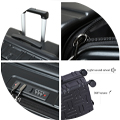
This exact reason explains why Pengteng’s luggage accessories feature items like handles and pull rods. The selection also includes wheels, combination locks, and various other suitcase parts. Every single component supports a distinct travel application.
Key Luggage Accessories Buyers Should Check
Before selecting luggage accessories, buyers must consider the entire journey. A suitcase travels from a home to a car. Next, it moves from the airport floor to the baggage belt. Finally, it goes from a hotel room into storage. Each distinct step tests a different part of the bag. The finest accessories are not merely attractive. They also feel solid, operate smoothly, and perfectly match the suitcase size.
Handles: the first touchpoint
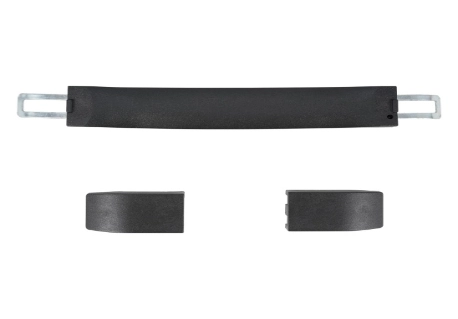
The handle usually serves as the very first part a traveler touches. If this piece feels sharp, loose, or flimsy, the entire suitcase seems cheap immediately. A proper handle must remain comfortable to grip. It also needs to be sturdy enough for a fully packed bag. Additionally, it must attach securely to the main shell or frame.
For B2B buyers looking for an oem luggage handle factory, this component requires careful attention. The handle must align with the intended use of the suitcase. For instance, a 20 inch carry-on might require a lightweight handle. Meanwhile, a massive 28 inch checked suitcase demands much stronger support.
Pengteng provides suitcase handles and replacement grip handles for professional buyers. These clients might need reliable parts for brand new luggage lines. Alternatively, they may require items for basic replacement needs.
Pull rods: smooth movement matters
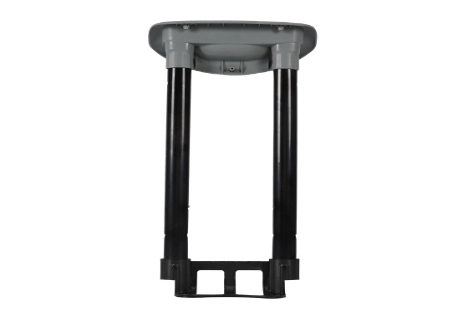
A quality pull rod ought to slide up and down without jamming. It must lock securely at every height setting. Furthermore, it should feel incredibly stable when the suitcase is fully packed. Travelers spot annoying shaking very quickly. This issue becomes obvious when they walk through vast airport halls or busy city streets.
For luggage brands, a fragile pull rod often leads to product returns and negative reviews. A dependable pull rod must undergo testing with actual weight. It cannot be evaluated solely by its outward appearance. It must also correspond to the precise suitcase size. This is because larger luggage places significantly more stress on the entire pulling system.
Wheels: small parts with big pressure
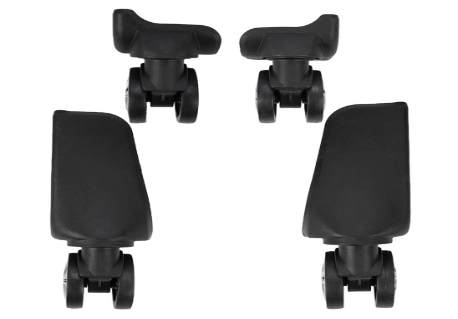
Wheels bear the entire weight of the loaded suitcase. They encounter slick airport floors and uneven sidewalks. They also roll across thick hotel carpets and bumpy road edges. Inferior wheels can easily make a lightweight suitcase feel terribly heavy. In contrast, robust wheels will make a massive suitcase much simpler to maneuver.
When choosing spinner wheels for luggage, buyers should check:
-
Smooth 360-degree movement
-
Stable wheel housing
-
Noise level
-
Load-bearing strength
-
Easy replacement
-
Wear resistance
Pengteng’s suitcase wheels and removable spinner wheels support travel products that need better movement and longer use.
How Size Affects Luggage Accessories
Luggage size decides which accessories matter most. A small carry-on suitcase does not face the same pressure as a large checked bag. A 24 inch suitcase needs balanced hardware, while a 28 inch suitcase needs stronger parts.
What size is a carry-on suitcase?
Many travelers ask: what size is a carry-on suitcase? A common carry-on suitcase is around 20 to 22 inches, but airline rules vary. Travelers should always check the airline’s size rule before flying.
A 20 inch suitcase often holds about 35-45 L. A 22 inch suitcase may hold about 40-50 L. When people search 22 inches luggage capacity in kg, a useful answer is usually 10-15 kg, depending on airline rules and packing style.
For carry-on luggage, lightweight accessories matter. The wheels, handle, pull rod, and lock should not add too much weight.
24 inch maleta size
The phrase 24 inch maleta size is useful for buyers serving English and Spanish search audiences. A 24 inch suitcase is usually a medium checked bag, not a carry-on. It often holds about 60-70 L and around 15-20 kg of packed items.
For this size, luggage accessories must balance weight and strength. The suitcase should roll smoothly when full, but it should not become too heavy before packing. Handles, wheels, and pull rods should be stronger than those used for smaller carry-on models.
28 inch luggage is medium or large?
A common buyer question is: 28 inch luggage is medium or large? In most luggage collections, 28 inch luggage is large. It usually holds about 85-100 L and can carry around 20-25 kg, depending on airline limits.
For 28 inch luggage, strong accessories are not optional. Large checked bags need reinforced handles, strong wheels, firm pull rods, and reliable locks. If one part fails, the whole suitcase becomes hard to use.
How to Measure Luggage Before Travel
Knowing how to measure luggage helps travelers avoid airport stress. It also helps brands write clearer product pages. Measurements should include the parts that stick out, not only the shell. Wheels and handles can make the final size larger than expected.
To measure luggage correctly:
-
Measure height from the bottom wheels to the top handle
-
Measure width across the widest side
-
Measure depth from front to back
-
Add length + width + depth for checked bag size
-
Check airline rules before travel
For checked bag size, many airlines use total linear measurement. For carry-on, airlines often use fixed height, width, and depth limits. This is why accessory design affects airline fit. A large wheel base or thick handle can push a suitcase over the limit.
How Pengteng Supports Luggage Accessory Buyers
Pengteng works with travel brands, wholesalers, and private-label buyers who need both complete luggage and parts. Our products page shows luggage, luggage accessories, and material options. This gives buyers more flexibility when building a product line.
Through our service support, we help with quality checks, samples, shipment support, and design communication. Customized samples usually take 7-15 days, and our quality process includes supplier checks, in-process inspection, final inspection, and full product review before delivery.
For custom projects, our ODM/OEM service supports logo, material, color, size, parts, and packaging choices. OEM projects start from 50 pcs, while ODM projects start from 100 pcs. This makes it easier for buyers to test new luggage accessories or full suitcase collections.
Luggage Accessories and Scratch Proof Luggage
Scratch proof luggage is often discussed as a shell feature, but accessories also help protect the suitcase. Strong wheel bases reduce scraping. Corner parts protect impact points. Stable handles lower stress on the shell. A clean lock design can also reduce surface damage around the opening area.
For buyers, the best product is not only scratch resistant. It should also move well, pack well, and stay useful after repeated trips. A suitcase with weak accessories will not feel durable, even if the shell looks strong.
That is why Pengteng treats luggage accessories as part of the full product design. We do not see them as minor parts. They are the details that travelers touch, pull, roll, and trust.
Conclusion
Luggage accessories play a major role in how travelers judge a suitcase. Handles, pull rods, wheels, locks, and other parts affect movement, safety, comfort, and long-term use. In 2026, with more attention on baggage fees, standard suitcase size for airlines, checked bag size, and carry-on travel, these parts matter even more. For brands and wholesalers, strong accessories can make luggage easier to sell and easier to trust. At Pengteng, we support buyers with complete luggage products, replacement parts, OEM/ODM service, samples, quality checks, and practical product development. Good luggage starts with the shell, but it earns customer trust through the parts used every day.
FAQs
Q: What size is a carry-on suitcase with luggage accessories?
A: Usually 20-22 inches, about 35-50 L.
Q: What is 22 inches luggage capacity in kg?
A: Around 10-15 kg, depending on airline rules.
Q: What checked bag size is a 24 inch suitcase?
A: Medium checked size, about 60-70 L and 15-20 kg.
 consult
 WHATSAPP
 leave message
 top
top