





Custom Luggage Manufacturer Checklist for 2026: Sizes, Samples, Quality Control, and Repair Parts
The rules for buying luggage have changed in recent years. Because airlines measure and check the size of your luggage, the cost for baggage can be high. Also, the online return of luggage can cost a lot of money. Many travelers prefer to take lightweight luggage when they go away. This means that in a product brief for importers, wholesalers and online shops, beautiful outer covers are no longer sufficient. Exact dimensions, sufficient capacity, strong hardware, consistent colors and spare parts for after-sales service are required.
Pengteng manufacturers custom luggage as a single task to convert any given market idea into a successful product line. In this task we manufacture cabin luggage as well as large numbers of checked luggage items. Our checklist is intended to identify all important questions that need to be answered before creating samples or placing large production orders.
Why the 2026 Sourcing Brief Needs More Detail
Even bags labeled as “cabin size” can fail to fit in the airplane cabin if for example the wheels or fixed handles are included in the total dimensions. Conversely, huge cases for checked-in luggage offer lots of room but can be extremely heavy and very cumbersome to pull once packed. For travelers who care about their luggage, silent wheels and sturdy pull rods are important features. Also, a quick fix for broken parts is desired.
A wholesale luggage supplier has to design new products based on a buyer’s brief. This brief has to clearly state who the end user is and how often he goes on a trip. Also the channel of sales and the target empty weight have to be stated. External dimensions complete, capacity, materials and service plan have to be specified for the supplier. In this way an OEM-luggage-factory gets precise instructions for the production of samples as well as for checking bulk goods.
Build the Range Around Real Travel Needs
A good collection usually requires multiple sizes. Cabin, medium checked, and large checked luggage fix different travel issues. Each size puts a unique amount of stress on the shell and the hardware. Buyers should map out each SKU first. They need to match it to a specific trip type, airline rule, and realistic packing weight. Do this before talking about colors or brand logos.
Cabin Luggage: Measure the Complete Outside
The question of what is considered a “carry-on size” or “cabin size” bag is one that lacks a global answer. While many bags are marketed as 20″ “carry-on” suitcases, each airline has their own strict regulations as to what does and does not qualify. A product page for a cabin case should include the dimensions for height, width, and depth in both centimeters and inches, and this should include any wheels and fixed handles.
You might need to explain how to measure a suitcase size. Tell your buyers to measure the closed bag at its widest outside points. The standard luggage size for airlines changes often. It depends on the carrier, the specific flight route, and the ticket type. Therefore, you should avoid making a broad “airline approved” claim.
Medium Checked Luggage: State Weight and Liters Together
Typically a 24-inch case is offered by sellers as a medium / large size checked-in baggage. Normal dimensions for such a case are approximately 3.5–4.5 kg / 60–70 L. However, dimensions can vary depending on the design of the case, therefore the weight of a 24 inch suitcase must be clearly stated in the product details.
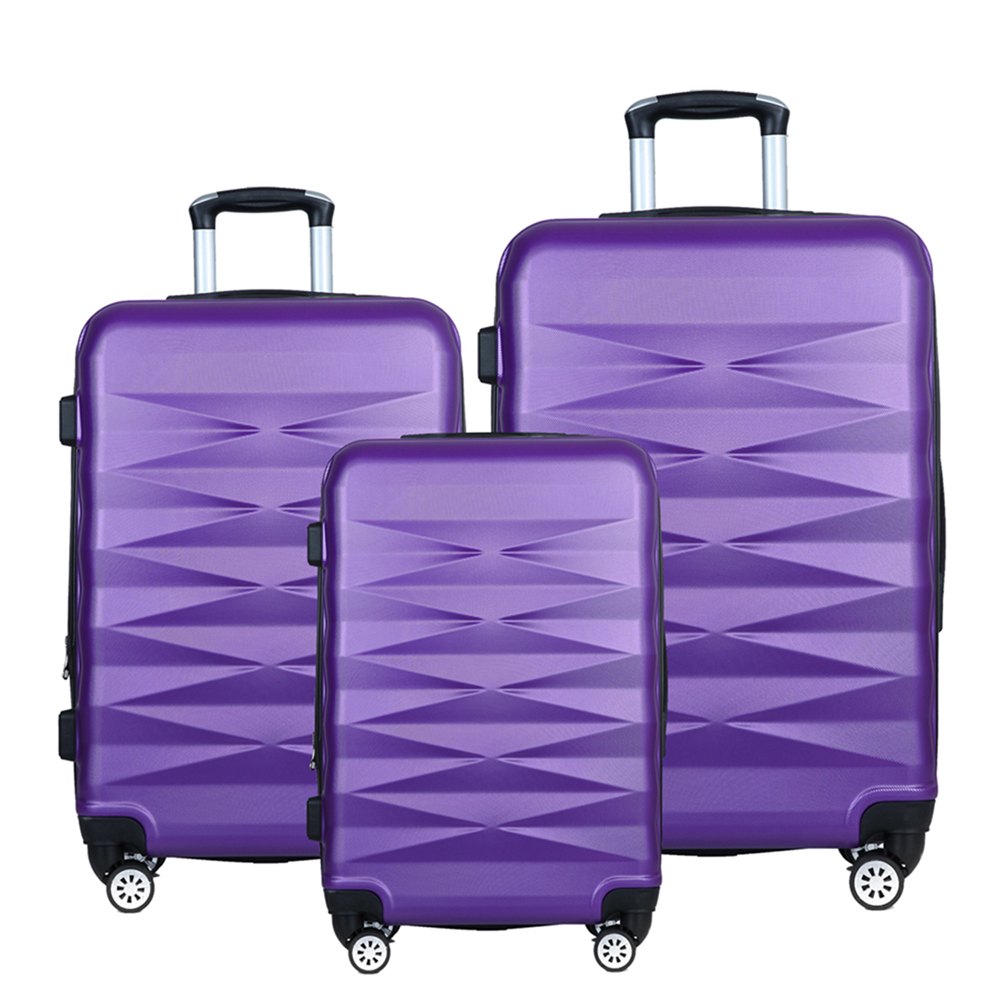
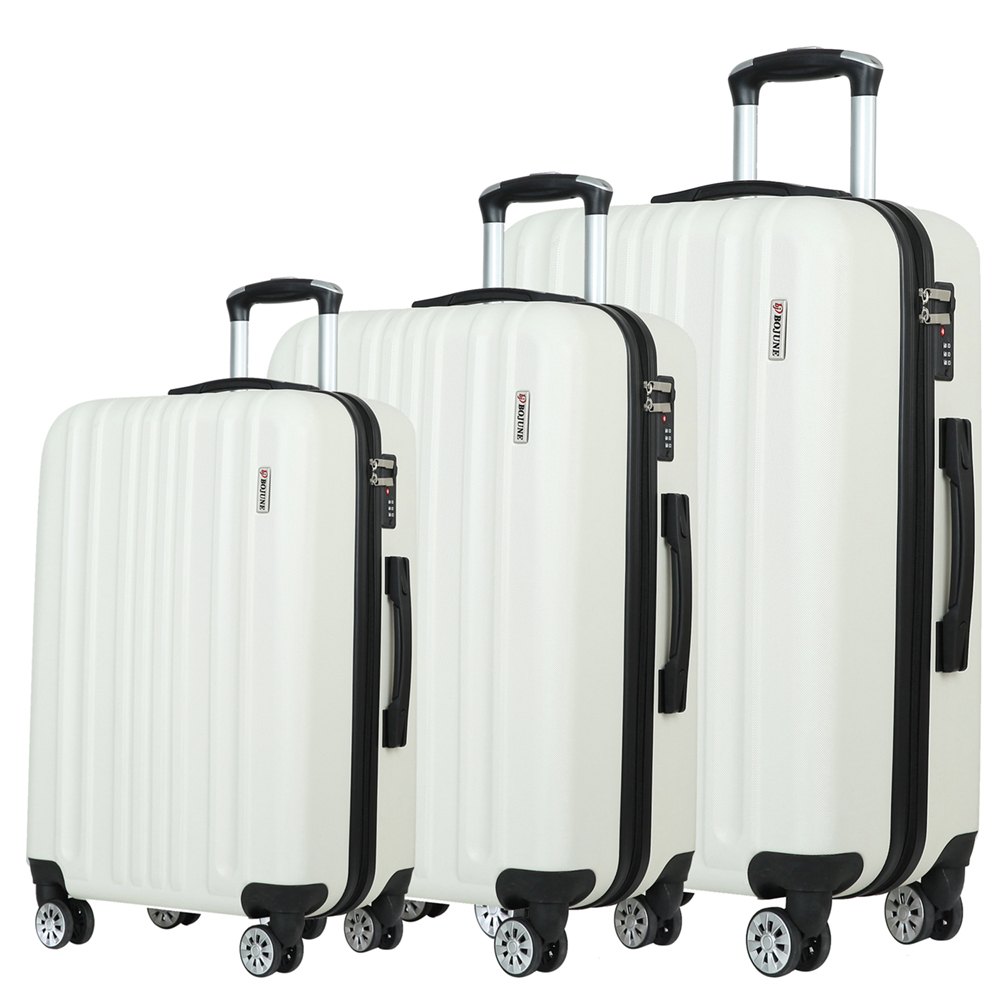
Shoppers frequently ask, can i hand carry 24 inch luggage. In most cases, it is far too big for the airplane cabin. A 20/24/28-inch ABS luggage set helps solve this confusion. It makes the size differences much easier for retailers to show.
Large Checked Luggage: More Space Can Add Risk
The debate of 28 inch vs 32 inch luggage focuses on room, ease of use, and weight limits. A 28 size suitcase fits long trips well. It also stays fairly easy to push around. A 32-inch case definitely holds more items. Yet, travelers might hit the airline weight limit before the bag is full. This giant size also adds heavy stress to the wheels, handles, pull rods, and shipping cartons.
Many sellers view 28 inches as a very safe core large size. A 32-inch model works better for moving houses or very long stays. You should label the medium trolley bag size with full dimensions and liters too. Do not rely on just the inch measurement.
Match the Material to the Price Point and Use Case
Material names drive a lot of online search traffic. Still, buyers must understand the exact role of each shell type. Our product collection features several luggage categories. This variety lets you plan a product line based on market needs. You do not have to force a single material onto every SKU.
ABS luggage fits lower price points nicely. It allows for molded shapes and many surface finishes. The hardware must still fit the case size properly.
PC+ABS luggage provides a great middle ground. It balances good looks, shell flexibility, and total cost.
PC luggage works well for premium lines. These items need a highly flexible shell and a very smooth surface.
PP luggage delivers a tough, flexible molded shell. However, you must carefully check the hinges, closures, and frame styles.
Fabric luggage gives users handy outside pockets. It offers a softer way to pack clothes. You need to check the stitching and zipper paths closely. The fabric thickness and corner reinforcements matter a lot too.
PVC luggage fits certain visual designs. It also works for highly price-focused sales programs.
Factories should never make lightweight luggage by weakening key stress points. You must ask the factory exactly where they removed the weight. Find out how this change impacts the shell thickness. Check its effect on wheel housings, handle bases, inside linings, and pull rods.
Test the Luggage Accessories That Customers Touch First
Testing the outer shell is vital. However, customer complaints normally start with the moving parts. Wheels roll over very rough floors. Pull rods handle heavy side pressure. Zippers stretch around tightly packed corners. Handles lift the entire heavy case. A good sample review treats all luggage accessories as one working system. Do not treat them as simple decorations picked at the last minute.
Wheels, Pull Rods, and Carry Handles
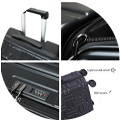
Fill a sample bag and roll it across different floor types. Listen carefully for any loud noises. Make sure the bag rolls in a straight line. Turn the bag sharply and look closely at the wheel housing. Pull the rod up at various angles. It needs to lock firmly at the correct heights. It should never stick or jam roughly.
A tiny bit of planned movement is totally normal. This is very different from a broken, loose luggage handle. Sometimes customers search how to fix a wobbly suitcase handle? online. The root problem could be loose screws or a cracked plastic base. It might also be bent metal tubes or worn-out guides. You must agree on normal handle movement before launching the product. Also, plan for replacement parts early. Our luggage accessories range includes strong handles, pull rods, wheels, locks, and many other parts.
Locks, Zippers, Linings, and Replaceable Parts
Test every single zipper path. Do this on both an empty and a fully packed sample. Look closely at the lock alignment and the inner lining seams. Check how the inside dividers attach. Find any spots where the fabric might get stuck. After that, ask a very practical service question. Find out which parts you can reorder by model and color. A private label luggage seller guards its good reputation this way. The service team needs to easily identify and replace a broken wheel, handle, or pull rod. They should do this without throwing the whole suitcase away.
Set Samples, MOQ, and Bulk Standards Before Production
A product sample acts as a strict decision tool. It is not just a pretty item for sales pitches. You need to record every approved detail clearly. Document the shell color and the surface finish. Note the exact logo size and its position. Confirm the lining, zipper type, wheel style, and handle grip. Do the same for the lock, shipping carton, tags, and all accessories. Pengteng’s ODM/OEM options fully support custom luggage programs. Even so, a written approval record is highly necessary for both parties.
Talk about the MOQ at the exact level where it matters. The minimum order for a shell color might be low. However, the limit for a printed lining or a custom wheel could be much higher. This also applies to logo plates and cartons. Some buyers want small orders with multiple styles. They should ask the factory which parts can work across different SKUs. Using shared parts makes buying much easier. It also helps build a simple repair stock later. Best of all, it does this without making every bag look exactly the same.
The final bulk inspection standard must match the approved sample completely. This standard should cover all incoming raw materials. It needs to include in-process factory checks and finished-product reviews. Function tests, packing rules, and shipping records are vital too. Our service support offers customized sample work and deep quality checks. This helps buyers link their initial design ideas directly to the final factory production.
Put the Right Facts on Every Product Page
Clear product pages stop needless questions and costly returns. You must give shoppers solid facts they can compare easily. Do not just upload pretty lifestyle photos. Every single luggage page needs to state:
the complete external dimensions, making sure to include wheels and fixed handles;
the exact empty weight in kilograms and the total volume in liters;
the correct travel use, such as cabin, medium checked, or large checked;
the specific shell or fabric material, along with key hardware details;
a polite note stating that airline rules change based on the carrier, route, and ticket type;
basic cleaning advice and clear steps for ordering spare repair parts.
These facts help the retail shopper immensely. They also improve the technical brief you give to a custom luggage manufacturer. You can use the exact same measurements and part names everywhere. Put them in factory quotes, sample feedback, and inspection forms. Use them for your online store pages and after-sales records. Closing these information gaps leads to far fewer nasty surprises upon delivery.
Conclusion
The best luggage lines start with smart choices. Customers must feel the quality, and sellers must verify the facts. You should define every size by its actual travel purpose. Always measure the full outside of the bag. Display the weight in kilograms and the space in liters. View a 24-inch or 28-inch tag as a simple starting guide, not the whole story. Choose ABS, PC+ABS, PC, PP, fabric, or PVC based on your target market. Next, test the wheels, pull rods, handles, locks, zippers, and boxes together. Finally, lock in your samples, MOQ, quality rules, and spare parts before mass production starts. At Pengteng, we link design, materials, and manufacturing together. We integrate accessories, quality checks, and service. This method helps buyers create reliable luggage lines for steady, long-term business.
FAQs
Q: What is a common 24 inch suitcase weight and capacity?
A: It usually sits between 3.5–4.5 kg and holds roughly 60–70 L. This changes based on the chosen materials and hardware.
Q: Can I hand carry 24 inch luggage?
A: In most cases, no. A 24-inch bag acts as medium checked luggage. It offers about 60–70 L of packing space.
Q: What size is a carry on suitcase?
A: It is frequently around 20 inches and provides 35–45 L of room. Always confirm the full outside dimensions and weight rules with your airline.
 consult
 WHATSAPP
 leave message
 top