






Aluminum Alloy Suitcase vs PC Luggage: Which Is Better?
 Air travel is crowded again. IATA expects global passenger numbers to reach 5.2 billion in 2026, which means fuller flights and more airport handling. Two popular choices are the aluminum alloy suitcase and PC luggage. Both belong to the hard shell suitcase category, but they answer different needs. Aluminum luggage gives a premium business look and a firmer frame feel. PC luggage is lighter, more flexible under pressure, and easier to build into different sizes, colors, and travel sets.
The better choice depends on the trip, the user, and the sales channel. A business traveler may care about image and structure. A retailer may need a durable suitcase that fits several price levels.
The Short Answer: Choose by Travel Scenario
Before comparing materials, buyers should think about actual use. A suitcase for short executive trips is different from a 28-inch long-distance luggage case. A case that looks strong in a showroom may feel too heavy when packed for a two-week trip.
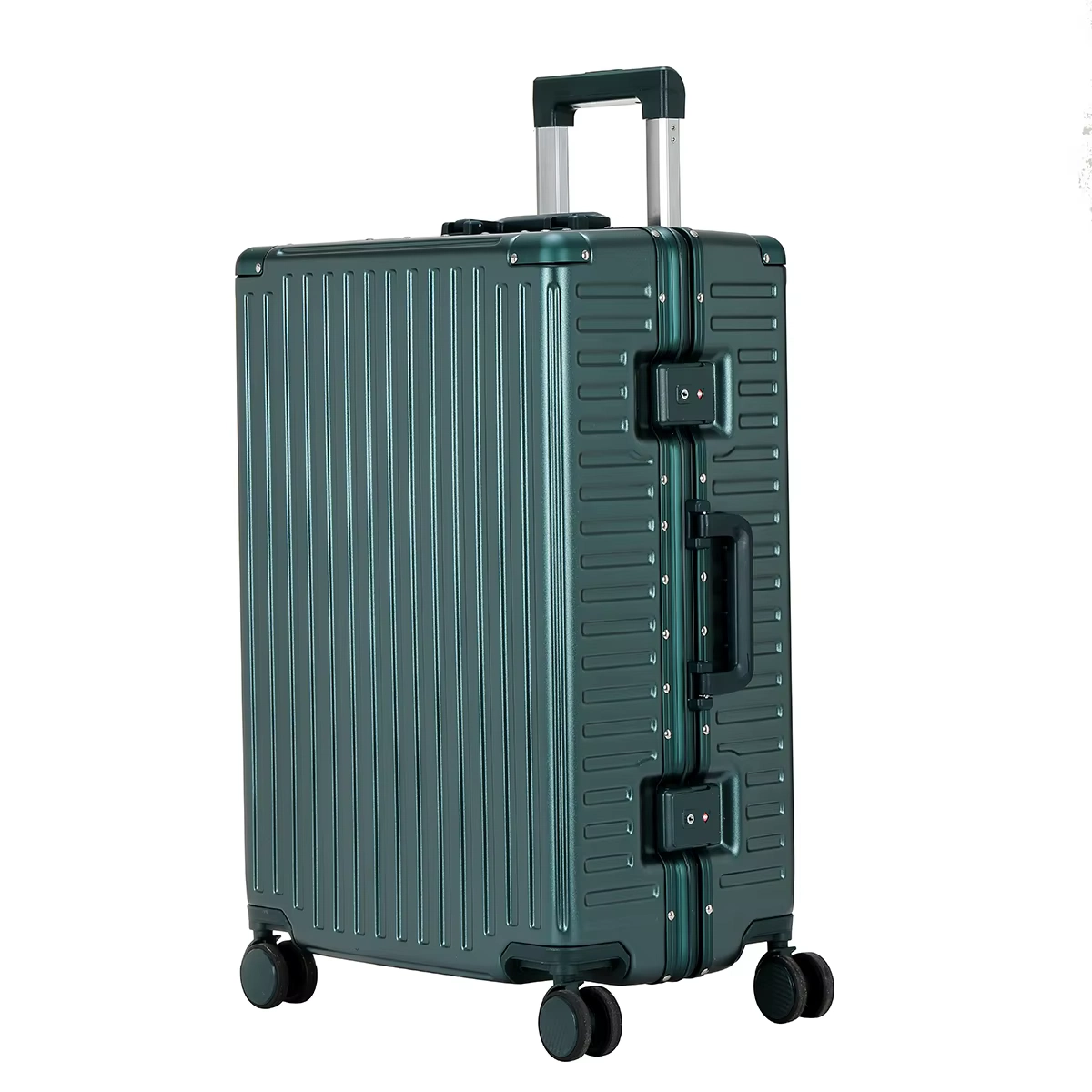
Choose an aluminum alloy suitcase if buyers want:
- a formal, high-end business look
- stronger edge and frame support
- a more structured hard shell suitcase feel
- better display value in premium luggage lines
Choose PC luggage if buyers want:
- lighter handling
- better flexibility under impact
- more color and surface design options
- better value for luggage sets and bulk orders
- large-capacity long-distance luggage
For many buyers, the best answer is not full aluminum or pure PC. ABS+PC with an aluminum alloy frame can give useful strength without making the suitcase too heavy.
What Makes an Aluminum Alloy Suitcase Attractive?
Aluminum luggage stands out because it looks solid before the buyer even opens it. The metallic finish, clean edges, and firm frame create a high-end first impression. This is why an aluminum alloy suitcase often appears in executive travel, premium retail, and business gift markets.
Strong Visual Value for Business Travel
A suitcase is not only a container. In airports, hotels, trade shows, and client visits, it becomes part of a traveler’s professional image. Aluminum luggage fits this setting well because it looks neat, serious, and expensive.
For business travel luggage, this matters. A polished aluminum alloy suitcase pairs well with formal clothing and frequent work trips. It also gives retailers a clear reason to place the product in a higher price range. Still, appearance should not be the only reason to buy. Aluminum luggage may feel heavier in large sizes, and dents can be more visible after strong impact.
Better Frame Support and Edge Protection
The frame is one of the main reasons buyers choose aluminum luggage. Corners, locks, and openings are common stress points during travel. A stronger frame can help the case keep its shape when it is stacked, pulled, or handled roughly.
This advantage is useful for travelers carrying formal clothes, work documents, samples, or valuable personal goods. Yet a durable suitcase is never only about shell material. Wheels, pull rods, locks, inner lining, and balance also decide the real travel experience.
Why PC Luggage Remains a Strong Choice
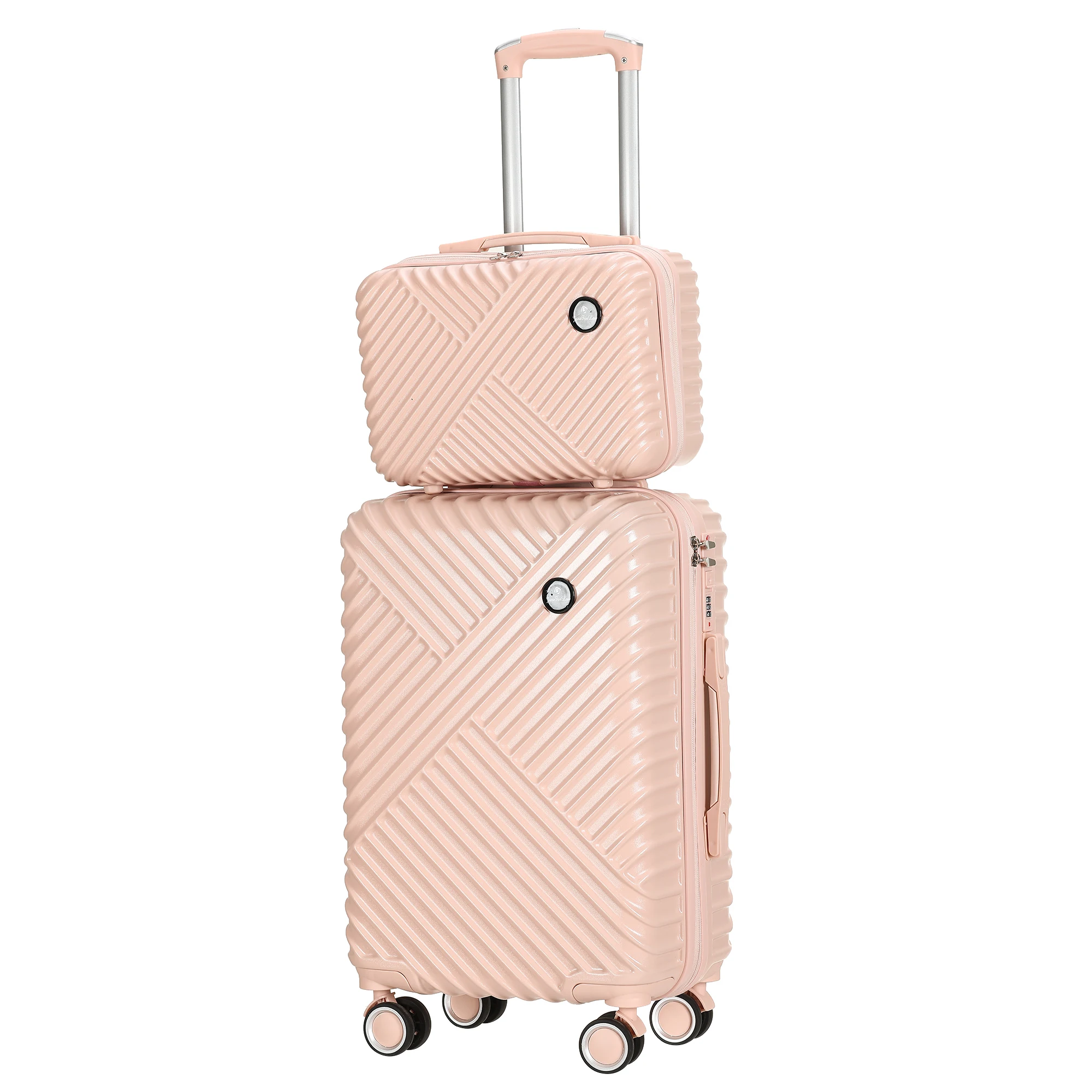
PC luggage has become popular because it fits the way many people travel today. It is light enough for long airport walks, flexible enough for regular impact, and easier to produce in different colors and shapes. For many users, PC luggage is more practical than a heavy aluminum alloy suitcase.
Flexibility Helps Against Daily Impact
A rigid suitcase can look strong, but travel impact is not always simple. A case may be pressed from the side, dropped at an angle, or pushed between other bags. PC material can bend slightly under pressure, helping the shell absorb force.
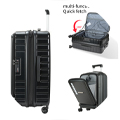
This is why PC luggage is common in checked luggage, cabin luggage, and family travel sets. Pengteng’s black travel case with makeup bag uses PC+ABS material and includes a password lock, waterproof and scratch-resistant features, and a design suitable for business or vacation travel.
Better Fit for Retail Product Lines
Retailers rarely need one suitcase only. They may need carry-on sizes, 24-inch checked cases, 28-inch long-distance luggage, matching sets, seasonal colors, and private-label packaging. PC luggage gives more room for this kind of product planning, while aluminum luggage can serve as a premium model in the same range.
Aluminum Alloy Suitcase vs PC Luggage: Key Differences
Material comparison should stay close to real use. A buyer needs to know what changes in handling, surface marks, storage, and selling value. The following points show where the two materials differ most clearly.
Durability and Weight
An aluminum alloy suitcase feels stronger because the structure is firmer. It can give better support around the frame and edges. PC luggage is durable in another way: it absorbs impact through controlled flexibility.
Weight is another key factor. Aluminum luggage can become heavy, especially in 28-inch or larger sizes. PC luggage is usually lighter and easier to move through airports, stations, parking areas, and hotels. For long-distance luggage, a lighter shell leaves more usable weight for clothing, shoes, gifts, and work items.
Surface, Wheels, and Locks
Both materials can show travel marks. PC luggage may show scratches, especially on glossy surfaces. Textured finishes can reduce visible marks. Aluminum luggage may resist some scratches, but dents can stand out more clearly.
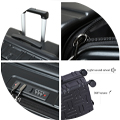
A reliable hard shell suitcase should also have smooth spinner wheels, a stable pull rod, and a secure lock. Pengteng’s 28-inch luggage uses ABS+PC+aluminum alloy frame material and highlights silent wheels, scalable storage, scratch-resistant design, and suitability for long-distance travel.
Which Is Better for Business and Long-Distance Travel?
Business travel luggage needs to look professional, but it also needs to move easily. A traveler may pass through several cities in one week, carry work clothing, attend meetings, and move between airport terminals and hotels. In that setting, both image and handling matter.
An aluminum alloy suitcase wins on appearance. It suits executives, brand gifts, and higher-end luggage collections. PC luggage wins on comfort. It is usually lighter, easier to lift, and more flexible during packed trips. For many business travelers, a PC or ABS+PC case with aluminum frame support may be more practical.
For long-distance luggage, the same logic becomes stronger. Larger cases carry more clothing, shoes, gifts, and travel tools. Full aluminum luggage can look excellent, but total weight may become a problem once the case is packed. A 28-inch PC luggage design with an aluminum alloy frame can offer a better balance of capacity, structure, and handling.
What Should B2B Buyers Check Before Ordering?
A material label alone cannot prove product quality. Before placing a bulk order, buyers should compare the whole suitcase, not only the shell.
Check these details first:
- shell material and frame structure
- suitcase size and real storage space
- wheel smoothness and noise level
- pull rod stability
- lock type and zipper or frame design
- surface texture and scratch resistance
- logo, color, packaging, and pattern options
Pengteng’s 28-inch model supports customized logos, packaging, and graphic design from MOQ 50 sets. The company also has more than 20 years of luggage production experience and works with ABS, PP, Oxford cloth, PVC, luggage accessories, and material development. For brands planning PC luggage, aluminum luggage, or mixed-material suitcase lines, contacting us can help turn product ideas into workable sourcing plans.
Conclusion
An aluminum alloy suitcase is better for buyers who want a premium look, firm frame support, and stronger business presentation. PC luggage is better for travelers who value lighter handling, flexible impact resistance, and wider design choices. For many real buyers, the best answer sits between the two: a hard shell suitcase made with PC or ABS+PC material and an aluminum alloy frame. This structure suits business travel luggage and long-distance luggage because it balances strength, weight, storage, and market price.
FAQs
Q1: Is an aluminum alloy suitcase better than PC luggage?
A: It looks more premium, while PC luggage is lighter and more flexible.
Q2: Is PC luggage good for long-distance luggage?
A: Yes. PC luggage is light, flexible, and suitable for large-capacity travel cases.
Q3: Which hard shell suitcase is better for business travel?
A: Aluminum luggage looks formal; reinforced PC luggage is easier to carry.
 consult
 WHATSAPP
 leave message
 top
top