






Carry-On Luggage Size Guide: What Brands and Buyers Need to Know in 2026
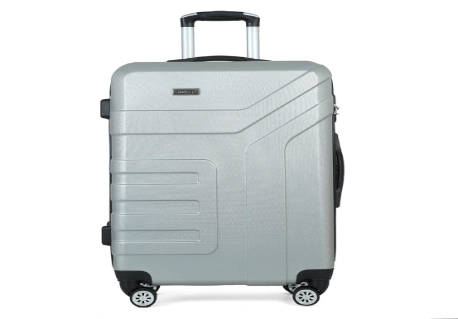
Carry-on luggage is growing highly essential today. Travelers want to skip checked baggage fees. They also want to bypass long collection lines. Furthermore, they wish to avoid the risk of delayed bags. However, picking the proper luggage bag is no longer just about grabbing a standard 20-inch suitcase. Airlines enforce varying size and weight limits. Meanwhile, components like wheels, handles, shell materials, and internal capacity alter how a case functions at the boarding gate.
These shifts heavily impact product design for luggage brands, importers, and wholesale buyers. They also affect purchasing plans and overall customer satisfaction. A winning carry-on luggage collection must meet actual travel needs. At the same time, it needs to stay functional, tough, and simple to sell.
At Pengteng, we assist buyers in creating luggage products for various markets. We also cover different price levels and travel habits. This guide outlines what decision-makers should carefully review when sourcing carry-on luggage in 2026.
Why Carry-On Luggage Size Matters More in 2026
Airline baggage rules are now a primary factor in the buying process. Carry-on allowances frequently shift by airline. They also depend on ticket type, route, cabin class, and aircraft type. A suitcase permitted on one flight might be too bulky or heavy on another.
Simultaneously, rising checked baggage fees push more travelers to stuff everything into a single cabin luggage bag. This trend drives the need for cases that offer helpful capacity without turning oversized.
For brands and retailers, the core customer pain points are very obvious:
-
Confusing airline size policies
-
Strict weight limits on international routes
-
Wheels and handles that add unexpected dimensions
-
Limited internal packing space
-
Heavy shells that reduce the usable weight allowance
-
Gate charges caused by oversized luggage
-
Weak components that fail during frequent travel
A smartly crafted carry-on suitcase must tackle several of these issues simultaneously. Size compliance draws the customer in. However, weight, storage, movement, and durability dictate whether the product receives positive reviews.
Common Carry-On Luggage Dimensions
There is no universal carry-on size approved by every airline. Still, numerous full-service carriers permit cabin cases near 55 × 40 × 20–23 cm. In regions where dimensions appear in inches, 22 × 14 × 9 inches acts as another frequent standard.
These dimensions generally encompass every outer element of the luggage bag:
-
Wheels
-
Top and side handles
-
Exterior pockets
-
Corner guards
-
Locks
-
Decorative parts
This specific detail is vital. A hard shell body might measure just 53 cm in height. Yet, exposed wheels and a raised handle can push the total height beyond 55 cm. Therefore, brands must clarify whether stated dimensions apply to the case body alone or the entire product.
Compact International Carry-On Cases
Compact cabin luggage typically measures about 55 × 35 × 20 cm. This size is a sensible option for travelers who fly on multiple airlines. It is also great for those taking international short-haul trips.
Capacity usually ranges between 30 and 38 liters. This depends largely on the shell shape and internal structure. This category caters to customers who prioritize wide airline compatibility over maximum packing room.
A compact luggage bag can also benefit travelers using trains, buses, and tight hotel rooms. Nevertheless, buyers must closely inspect the internal volume. Thick linings, massive wheel housings, and large handle systems can cause a compact case to feel much smaller than its outside measurements indicate.
Larger Domestic Carry-On Cases
Certain markets permit cabin luggage near 56 × 36 × 23 cm. These models can deliver roughly 38–45 liters of storage space. They are very appealing to travelers going on three-to-five-day trips.
The extra depth yields valuable packing space. Conversely, it increases the risk of rejection on airlines with tighter baggage rules. Thus, a larger carry-on luggage design must be promoted with a distinct size warning instead of being labeled as universally approved.
Retailers can minimize customer complaints by displaying dimensions in both centimeters and inches. Product pages must also advise customers to verify the operating airline’s current policy prior to departure.
Size, Capacity, and Weight Must Work Together
External dimensions represent just one aspect of the design. A carry-on luggage bag might fit into an airport measuring frame perfectly. Yet, it can still offer poor value if its shell is heavy or its internal layout wastes space.
Before picking a model, buyers should evaluate three distinct specifications:
1. Full external dimensions, including wheels and handles
2. Usable internal capacity in liters
3. Empty product weight in kilograms
For instance, a 35-liter suitcase weighing 2.6 kg offers more capacity within a 7 kg limit than a comparable case weighing 3.5 kg. That specific difference proves crucial to customers transporting laptops, shoes, or business attire.
Choosing a Practical Capacity
A capacity of 30–35 liters usually works well for a short journey. A 36–40-liter case grants travelers added flexibility. Meanwhile, products exceeding 40 liters demand strict attention to external depth.
Functional capacity also relies heavily on the internal layout. A flat packing zone, compression straps, zippered dividers, and thin pockets make a smaller travel suitcase much simpler to utilize.
At Pengteng, our luggage product range features diverse sizes and structures. We cover cabin, checked, business, and leisure travel. Buyers can evaluate formats before deciding on a design for their specific market.
Keeping the Empty Weight Low
Lightweight luggage stays a top purchasing priority. This is especially true where cabin baggage limits are severe. However, cutting weight must not involve using flimsy wheels, fragile handles, or a wobbly trolley system.
A well-balanced product should merge:
-
A shell suited to the target price and durability level
-
A stable but lightweight pull rod
-
Smooth spinner wheels
-
Compact internal fittings
-
Strong stress points around handles and wheel mounts
Buyers must ask for the weight of the completed sample. They should not rely merely on an estimated shell weight. Locks, linings, zippers, wheels, and packaging all impact the final number.
Which Material Is Best for a Carry-On Luggage Bag?
Material dictates weight, price, aesthetics, impact resistance, and customer expectations. Pengteng supplies ABS, PC+ABS, PP, PVC, and fabric luggage products. This allows buyers to align the material with a distinct market position.
The most appropriate material is not always the priciest one. Rather, it is the material that sustains the product’s intended purpose, retail price, and target customer group.
ABS for Accessible Price Points
ABS is extensively utilized for hard shell carry-on luggage. It is light, simple to mold, and highly cost-effective. It accommodates numerous colors, textures, and surface patterns. This makes it ideal for promotional lines and entry-level retail collections.
For constant travel, shell thickness and structural layout demand rigorous testing. Ribs and textured surfaces can boost rigidity. They also help conceal minor scuffs.
PC+ABS for a Balanced Product
PC+ABS merges the shaping and cost benefits of ABS with extra flexibility from polycarbonate. It is frequently chosen for mid-range luggage. Such luggage needs an elegant look and superior response to impacts.
This material functions excellently for a carry-on suitcase targeted at business travelers. It also suits frequent flyers or customers desiring robust performance without upgrading to a premium metal case.
PP for Flexibility and Repeated Use
Polypropylene is highly prized for its flexibility, impact resistance, and fairly low weight. It represents a solid option for a lightweight luggage collection. This is especially true when durability stands as a primary sales feature.
The ultimate outcome still relies on mold design, wall thickness, components, and assembly. Material names alone cannot guarantee product quality. Therefore, physical sample testing stays indispensable.
Fabric for Flexible Storage
Fabric luggage provides handy exterior pockets and a certain degree of packing flexibility. These attributes are highly beneficial for travelers requiring swift access to documents, chargers, or travel essentials.
Buyers must evaluate abrasion resistance, stitching quality, water resistance, zipper durability, and frame stability. Soft luggage can expand when stuffed full. Consequently, its loaded dimensions must also be evaluated.
Features That Make Cabin Luggage Easier to Sell
Travelers might start their hunt based on size. However, they evaluate products through functional details. The finest carry-on luggage must feel sturdy, glide effortlessly, and utilize its restricted space smartly.
High-value features include:
-
Four smooth spinner wheels for crowded terminals
-
A telescopic handle with limited movement
-
A built-in combination or TSA-style lock
-
Compression straps that control packed clothing
-
Divided storage for shoes and small items
-
Scratch-resistant shell textures
-
Comfortable top and side handles
-
Replaceable or serviceable components
-
An expandable section with a clear size warning
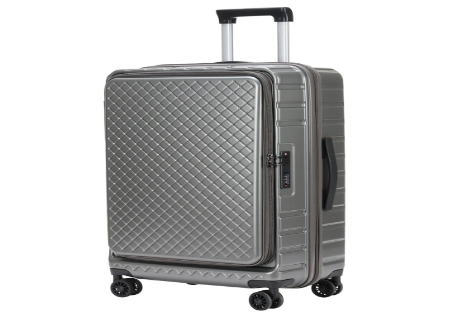
Front-opening luggage serves as another handy choice for business travelers. It grants quicker access to a laptop or important documents. However, the front compartment must not weaken the strength of the main shell.
Our waterproof PC travel case demonstrates how a front-opening structure can fuse with a hard shell design to meet modern travel demands.

How Brands Should Source Carry-On Luggage in 2026
A robust specification must start with the target customer and the specific airline market. Attempting to build one luggage bag for every passenger and every route usually results in vague marketing and poor performance.
Brands must clearly define:
-
Target external dimensions
-
Preferred capacity in liters
-
Maximum empty weight
-
Shell or fabric material
-
Wheel and handle requirements
-
Lock type
-
Interior layout
-
Color and surface finish
-
Testing standards
-
Packaging and labeling needs
Samples must be measured with all wheels, handles, and guards fully included. Buyers must also inspect rolling performance, handle movement, zipper toughness, loading capacity, impact resistance, and overall balance.
Pengteng provides OEM and ODM luggage services for buyers needing assistance with size, color, material, logo, structure, samples, and mass production. Our product development efforts help a brand transform a market concept into a precise, manufacturable luggage specification.
Sustainability currently influences product planning heavily. Instead of depending on vague environmental claims, buyers must analyze material choice, product lifespan, replaceable components, packaging, and shipping efficiency. Our strategy regarding sustainable development and transportation focuses on recycled materials, lightweight frames, wear resistance, and extended product usage.
Conclusion
The correct carry-on luggage size is not merely “20 inches.” Brands and wholesale buyers must evaluate overall external dimensions, usable capacity, empty weight, material, components, and the regulations of their intended travel market. Compact cases facilitate broader airline compatibility. Conversely, larger cabin luggage supplies more packing room but might encounter stricter limits.
A successful luggage bag must supply customers with truthful size data and functional value. It needs to glide smoothly, utilize internal space effectively, and stay robust during repeated travel. At Pengteng, we collaborate with buyers to pick materials, enhance structures, create samples, and build luggage products for targeted markets. Precise specifications during the sourcing phase can lower returns, avoid deceptive claims, and foster deep customer trust.
FAQs
Q: What is a common international carry-on luggage size?
A: It is roughly 55 × 40 × 20 cm. However, buyers must always verify the airline’s current rules.
Q: How much capacity does a carry-on luggage bag usually offer?
A: Most carry-on luggage delivers about 30–45 liters. This varies based on dimensions and internal structure.
Q: How heavy should an empty carry-on suitcase be?
A: A functional lightweight model normally weighs between 2 and 3.5 kg. This depends on its material and specific features.
 consult
 WHATSAPP
 leave message
 top
top