





Luggage Accessories Guide: Essential Parts, Size Questions, and Repair Tips
People traveling usually notice luggage accessories only when a problem happens. A wheel might catch on a dirty station floor. A loose luggage handle can make a heavy case difficult to lift. Sometimes, a lock simply stops working right before a flight. For luggage brands, store owners, and travel-goods buyers, these tiny parts greatly shape a buyer’s opinion of the entire suitcase. These parts also impact sourcing, customer support, and future orders.
This subject is highly practical today. Travelers frequently compare airline baggage limits. They also search for ways to track checked bags. Furthermore, customers expect their products to survive longer. This guide highlights the primary luggage accessories. It answers common suitcase-size questions. It also explains the key details wholesale buyers must discuss with their supplier. At Pengteng, we manufacture luggage. We also supply accessory categories that feature handles, pull rods, wheels, combination locks, and structural components. Our luggage accessories range gives buyers an excellent starting point to compare these items.
What Counts as a Luggage Accessory?
Luggage accessories are additional items used by travelers. It also describes the portions: parts incorporated into a case directly. This second definition is extremely relevant in the domains of manufacturing and wholesale business. In other words, at each and every fitting, it has to fit flawlessly with their outer shell / fabric. It must suit the planned use. It must be accessible also for future repairs. A suitcase is a holistic product theme. Never simply an empty set of shell with a brand name.
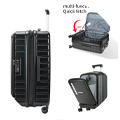
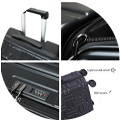
Wheels and wheel housings: Twin or single-wheel designs change the rolling feel. They also dictate replacement needs. Buyers need to examine the mounting points and the wheel size. They should never look only at the outward appearance.
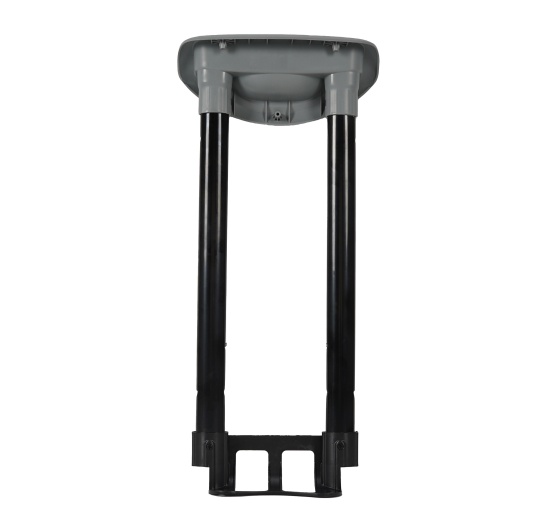
Pull rods and carry handles: Telescopic rods carefully guide a rolling case. Top and side handles help you carry the bag. They are essential when stairs, curbs, or tight aisles make rolling impossible.
Locks and zippers: Combination locks, zipper pulls, and matching zipper chains determine security and closure. A lock must fit the overall case design. It also needs to match the target market.
Corners, corners and other miscellaneous bits: These are there to protect more significant contact points. They also complement the visual appearance of the case.
This is especially true with respect to their coloration, surface finish and tight fit in private-label collections. Private-label collections pay great care to color, finish and fit
Pen your own travel add-ons: Packing cubes, lug tags incase those bags get lost on the trot and safety straps or tracking-device pockets are what peeps need to reign it in. They also make identification easier. Stores might sell them separately. They can also be scheduled directly into a new product line by brands. Brands can even schedule them directly into a new CPG product
The handle, pull rod wheel and combination lock sections of Pengteng showcase basic groups of components. Buyers can review these easily. Exact fit is always subject to individual case models. You must share some information about your replacements when you plan for. Provide the supplier with sizes, fixing points, material & colour of it. Always include the matching product sample or technical drawing.
Suitcase Size, Weight, and Airline Questions
During travel seasons, searches for “what size is a carry on suitcase” and other standard luggage sizes based upon an airline take off. That said, there is no universal rule that all airlines abide by. Carrrier, flight route, ticket fare and type of airplane all play a role in the size limits. A measurement that passes on one run might not pass another. Especially so when you consider the wheels and handles included.
Measure the Full Outside Dimensions
To find the suitcase measurements, you need to put it in an upright position when fully packed. Measure its maximum height at the highest point, then width and depth using your pencil to mark where you’ll take measurements within those widest sections. You have to put the wheels and fixed handles as well as parts extends out from shell too. Before you leave, check those exterior dimensions against your airline’s official baggage page. Guidelines: Do not just believe the number appears in a product name. A "20-inch" case, for example, may have a higher overall height when you add in the wheels.
Normally, a 24-inch suitcase is classified as checked baggage. It is rarely a cabin bag. However, airline rules do differ and so does product measurements. Now, the question comes — are 24 inch luggage allowed in hand carry? But usually at least, it doesn’t fit in the overhead cabin. This must be confirmed with your airline, but the overall maximum dimensions There are several important points to note about the weights of 24 inch suitcases and these weights vary depending on shell material, internal construction as well as metal fittings. So always ask what the empty weight is for that aircraft. Weighing them all the same and on average is not suitable as well.
Compare Medium and Large Cases by Trip Needs
A medium trolley bag size is typically a checked case in the mid-20s, usually. That said, naming habits were never entirely standard. A 28 size suitcase is for longer trips. This can also help with travelers who carry more gear. The other 32-inch case is spacious inside, even more room. However, when you fill it to capacity, that could put you over the airline weight or size limits. Choosing between a 28 inch luggage vs. the size label is not what we can depend on less with the dimension of it. Trip length, weight and specific carrier rules largely dictate it.
For luggage brands and retail stores, accurate size charts lower customer returns. You should list external dimensions in centimeters and inches. Clearly state whether these numbers include the wheels. Always show the empty weight. In our Pengteng luggage collection, buyers can evaluate shell and fabric categories. These include ABS, PC+ABS, PVC, PP, and fabric luggage. Every material introduces unique design and weight factors. Therefore, always confirm the exact specification for the specific model being quoted.
Repairability Is Part of the Buying Decision
Travelers now want bags that stay functional even after one component breaks. A replaceable wheel or handle is highly valuable. It often matters more than a purely cosmetic feature, especially when a case sees heavy use. At the same time, baggage tracking is a normal part of trip planning today. A luggage tag or a special pocket for a tracking device helps with quick identification. However, it does not replace the airline’s official baggage system. It also cannot guarantee bag recovery.
For wholesale distributors and private-label buyers, repairability begins long before mass production. You should ask if spare parts can match the original factory order. Find out how the factory identifies these parts. Check what specific information is necessary to confirm a proper fit. Always keep a clear record of the case model, component code, exact color, and hardware dimensions. If you sell your assortment across multiple regions, verify your documents. Ensure that replacement guides and warranty texts remain clear for every local market.
What to Check When Sourcing Luggage Accessories
A beautiful sample is just one small part of a safe order. Buyers must evaluate the accessory alongside the main luggage body. They must consider the target customer, the purchasing plan, and the customer service process. Early communication prevents major issues. It stops you from buying a wheel that fails to fit the base. It avoids a handle that feels weak when fully loaded. It also prevents a lock that ruins the visual design.
Fit and function: Inspect the attachment points. Test the physical movement on the actual case. Roll the weighted samples over rough surfaces. Use floors similar to those your customers navigate.
Material and finish: Verify the raw material, color, surface texture, and coating against an approved sample. A tiny visual mismatch will look terrible across a matched luggage set.
Quality checks: Agree clearly on what factors will be inspected. Decide how workers will record product defects. Determine when formal approval is necessary. Ask to see the production and sample process before you confirm any order.
Supply planning: Talk about order quantities, delivery lead times, packing methods, and spare-part supply early on. These business terms change based on the project. Therefore, request a written confirmation. Never assume the factory will provide a standard offer.
Customization and service: For OEM, ODM, or private-label projects, you must align the artwork and product specifications. Coordinate the packaging and after-sales duties. Pengteng clearly outlines its customization and wholesale support for buyers who are developing a new project.
Pengteng handles complete luggage categories. We also manage accessory components. This dual focus helps buyers discuss a case and its fittings during a single sourcing meeting. Our product listings feature luggage options in multiple materials. They also show various accessory categories. You must confirm the availability and exact specifications for every single order. Some buyers seek a custom luggage manufacturer or a wholesale luggage supplier. For them, a short project brief is highly useful. Include the target size, material, market, order quantity, and required fittings. This makes the initial discussion much more productive.
Conclusion
Luggage accessories might seem small. However, they heavily influence travel comfort, product durability, and ease of repair. They change how people judge a travel product after the purchase. You should start with the parts people touch the most. These include wheels, pull rods, handles, locks, zippers, and protective corner components. Next, check how each specific part fits the case. Verify if long-term replacement support is actually realistic. For travelers, the best habit is to measure a packed suitcase from its furthest outer points. Always confirm the airline’s current size limits. Size labels alone are never reliable enough. For retail shops and B2B buyers, careful specifications prevent avoidable problems. Detailed sample checks and clear service terms also help. Pengteng’s luggage and accessory categories offer a solid foundation. They help you discuss a fully coordinated product line. This covers everything from material and size to functional components and custom branding.
FAQs
Q: What is the 24 inch suitcase weight?
A: There is no single fixed weight. You must check the specific model’s listed empty weight in kg before you begin packing.
Q: Can I hand carry 24 inch luggage?
A: Usually, you cannot. Airlines generally require you to check 24-inch cases. Always confirm the full exterior dimensions with your specific airline.
Q: How to fix a wobbly suitcase handle?
A: First, tighten any accessible metal screws. If the internal rod or the base mount is bent, you should request a compatible replacement part from the manufacturer.
 consult
 WHATSAPP
 leave message
 top