





Carry-On Luggage Size Guide 2026: How to Avoid Gate Fees and Pack Smarter
Carry-on travel sounds simple until a suitcase meets the airport sizer. A bag sold as cabin luggage may fit one airline’s limit but fail another’s, especially when wheels, handles, or an overfilled front pocket add a few centimeters. In 2026, there is still no single worldwide carry-on standard. At the same time, gate checks are becoming harder to ignore, and baggage fees can turn a low fare into an expensive trip.
This guide explains how to choose carry-on luggage by external size, empty weight, capacity, material, and trip length. At Pengteng, we make luggage for varied travel needs, so we know that a useful case must do more than look compact. It should carry what you need, move easily, and stay within the rules that apply to your actual ticket.
Why Carry-On Luggage Size Matters More in 2026
Airlines use different aircraft, cabin layouts, fare types, and baggage policies. That is why a case accepted on one flight may be charged or checked on the next. Some basic fares include only a small personal item. Others allow a suitcase in the overhead bin but place a strict weight cap on it.
Three pressures now shape the choice:
More travelers want to avoid rising checked-bag charges.
Gate staff may measure a bag with wheels and handles included.
Travelers want more packing room without carrying a heavier shell.
Search interest also reflects this tension. People are looking not only for carry-on luggage but also for compression packing tools and larger checked cases. The real goal is not always to travel with the smallest possible bag. It is to choose the right volume for the route and avoid paying for space you did not plan to use.
Common Carry-On Dimensions and Weight Limits
You will not find one single standard size. However, certain dimensions show up frequently. A typical limit in North America is roughly 22 × 14 × 9 inches. This equals 56 × 36 × 23 cm. Many airlines overseas set rules near 55 × 40 × 20 cm. You can use these numbers as a helpful guide. They are not guaranteed rules, though. Make sure to review the exact rules for your specific airline and ticket type. Do this before you head to the airport.
Measure the Whole Case, Not Only the Shell
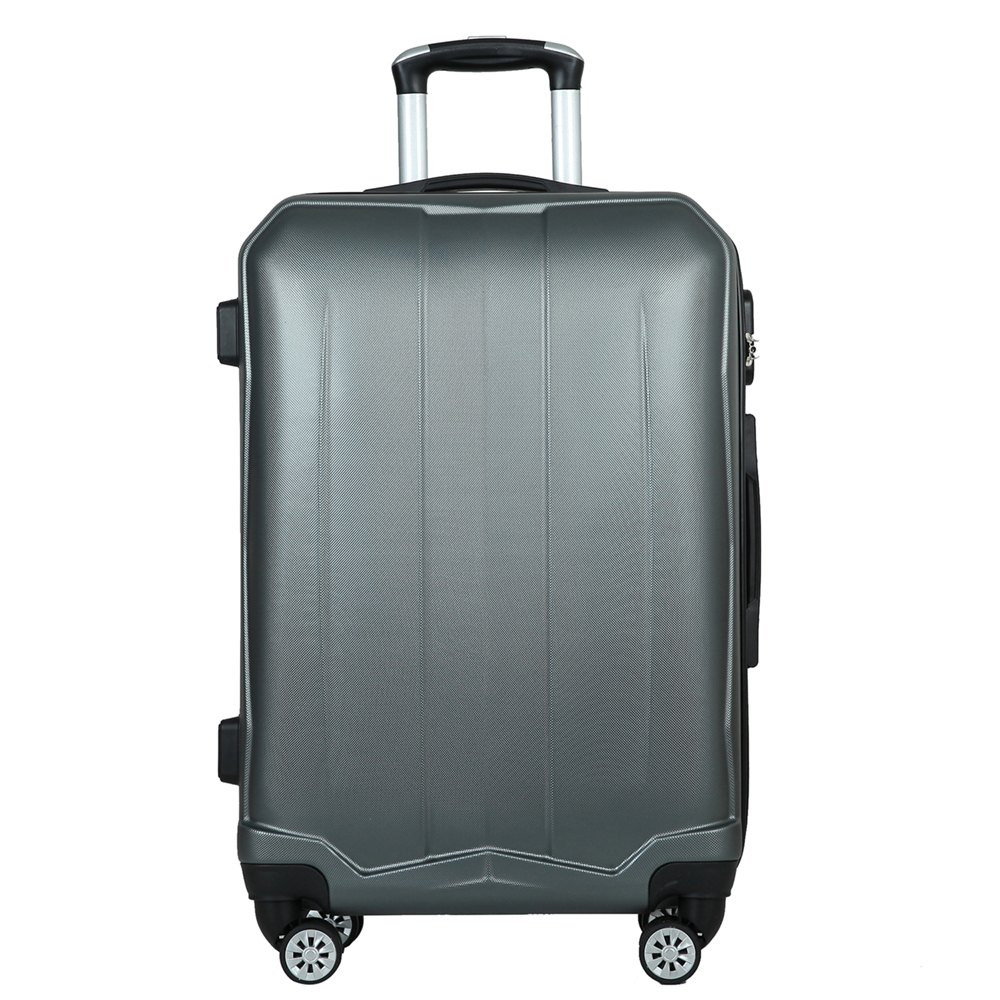
Stand your packed bag straight up on a flat surface. Start measuring from the ground up to the peak of the top handle. Next, measure the width across the widest parts. Then, check the depth from the very front to the back. You must count the spinner wheels and side handles. Also include bumper guards and any unzipped expansion parts. Brands often list just the shell dimensions. This number is usually smaller than the total outside size. Airport workers will measure that total size.
Always check these dimensions again after you finish packing. A soft pocket on the front might stick out. Also, an open expansion zipper adds a few extra centimeters. Your empty bag might already sit right at the maximum allowed size. If so, try to leave some extra space inside. Do not try to stuff in extra clothes.
Check Weight Before Capacity
Carry-on weight rules usually range from 7 kg to 10 kg. Some airlines do not enforce a strict maximum. Others have very different rules depending on the ticket. You should weigh your fully loaded suitcase at home. Choosing a lighter bag gives you more room for your belongings. However, a light frame is not always better. It should never mean dealing with flimsy wheels or a wobbly handle. Good corner protection is also very important.
Brands usually list bag capacity in liters. A 30–40 L carry-on works well for a weekend getaway. It also fits a well-planned short vacation. A 40–45 L bag holds more items. Even so, the overall shape and exterior parts determine if it passes the size check. Liters only tell you about the space inside. Airline staff only care about the outside measurements and the total weight.
How to Choose the Right Luggage for Your Trip
A size chart alone cannot tell you whether a suitcase will work well. Think about the route, number of travel days, surface conditions, and the items you cannot check. Pengteng offers luggage in several structures and materials, including fabric, PC+ABS, ABS, PVC, and PP options, because different journeys place different demands on a case.
Match the Material to Real Travel Conditions
Hardside luggage is useful when you want a firm outer structure and a surface that is easy to wipe clean. ABS can support accessible, lightweight designs. PC+ABS combines material qualities for buyers seeking a balance between weight, appearance, and daily travel use. PP is another practical choice where flexibility and repeated handling matter.
Fabric luggage can offer a softer body and convenient exterior storage, depending on the design. It may suit travelers who often need quick access to documents or a light jacket. Before choosing, compare the complete case rather than judging the shell alone. Wheel mounting, zipper construction, handles, lining, and internal dividers all affect daily use. Our Pengteng luggage collection lets buyers review these categories in one place.
Choose Wheels and Handles for the Route
Four spinner wheels move easily through airport halls because the case can roll beside you. Two-wheel designs may feel more stable on uneven ground but need more space behind the traveler. In either style, check that the wheels turn smoothly and sit firmly in their mounts.
The pull rod should extend to a comfortable height without excessive movement. Test the top and side handles with weight inside the case. These parts take repeated strain during transfers. Pengteng also supplies luggage wheels, handles, pull rods, locks, and other parts, which gives our team a practical view of how each component supports the complete case.
Treat Expandable Luggage with Care
Expandable luggage is helpful when plans change or souvenirs come home with you. However, the expanded depth may exceed a carry-on limit. Use the extra section as flexible space, not as permission to ignore the size rule. For an outbound flight, keep it closed. If it must be opened on the return journey, be prepared to check the case and follow the airline’s weight allowance.
Compression cubes can organize clothing, but they do not reduce weight. They may also encourage overpacking until the shell or zipper is under constant pressure. Pack dense items near the wheel end, keep liquids easy to remove, and leave the closure line free from fabric.
A Practical Packing Plan for a 3–5 Day Trip
Good packing starts with a short list, not a larger suitcase. Lay out everything first, then remove duplicate items and pieces that serve only one purpose. Keep medicine, travel papers, valuables, and permitted batteries in the cabin bag. Airline rules for batteries and liquids can change, so check official guidance for every route.
For a typical 3–5 day journey, consider:
Three or four tops that share the same color range
Two bottoms, including the one worn in transit
One light outer layer
Underwear and socks for each day
One compact pair of spare shoes, if needed
Travel-size toiletries inside the required clear bag
Chargers, documents, and medicine in an easy-access section
Wear the heaviest shoes and outer layer on the plane. Roll softer garments or fold them into packing cubes. Fill small gaps with socks, but do not pack around a wheel housing so tightly that it pushes into the shell. Finally, weigh and measure the case again. A quick home check is far cheaper than rearranging belongings at the gate.
What Retailers and Private-Label Buyers Should Check
Travelers are paying closer attention to size accuracy, empty weight, organization, and repairable parts. For a retailer or brand owner, those concerns should appear in the product brief. State whether dimensions include wheels and handles. List capacity in liters, weight in kilograms, material, lock type, and whether an expansion section changes the external depth.
At Pengteng, our OEM and ODM options support product choices around material, structure, appearance, and related details. We also work with buyers who need multiple styles or smaller batches. A sample provides the chance to test packed dimensions, wheel movement, pull-rod feel, stitching, zippers, and interior layout before a larger order.
Quality review should cover more than a finished-case appearance check. Our service process includes supplier quality verification, incoming inspection, in-process inspection, outgoing inspection, and finished-product inspection. This matters because a suitcase is a system: a strong shell cannot make up for a weak handle, and smooth wheels cannot fix inaccurate cabin dimensions.
Conclusion
The best carry-on luggage for 2026 is not simply the case with the largest advertised capacity. It is the one that fits the airline’s complete external limits, stays within the ticket’s weight allowance, and suits the way you travel. Start with the operating carrier’s current rules, then compare total dimensions, empty weight, liters, material, wheels, handles, and internal layout. Measure again after packing, since expansion and bulging pockets can change the result. For sellers and private-label buyers, clear specifications and component testing are equally important. At Pengteng, we connect material choices, luggage parts, product development, and inspection so buyers can build practical collections around real traveler concerns.
FAQs
Q: What capacity is suitable for a short carry-on trip?
A: About 30–40 L is practical for many 3–5 day trips.
Q: How heavy should packed carry-on luggage be?
A: Keep it within the airline limit, commonly 7–10 kg on many routes.
Q: Does a 45 L suitcase always qualify as carry-on luggage?
A: No. Airlines judge external dimensions and weight, not liters alone.
 consult
 WHATSAPP
 leave message
 top