





Luggage Types for 2026: Match Every Case to a Real Travel Scenario
Journeys are rarely identical. A business person might travel for a short two-day meeting. At the same time, a family could check several bags for an extended vacation. A student relocating to a new town might require extra space for large items instead of just clothing. Because of this, picking the proper luggage types means more than just purchasing the largest bag. It requires pairing the dimensions, weight, outer material, and wheels with the actual journey. For vendors, addressing these needs creates a practical product catalog. This approach reduces buyer complaints about cabin sizing, everyday use, and later repairs.
At Pengteng, we focus on travel cases, luggage accessories, and custom programs. Our product range gives buyers a strong foundation to evaluate various sizes and builds. The tips provided below offer real value. They support consumers preparing for a trip. They also direct companies designing a retail or private-label lineup.
Start with the trip, not the size label
An inch label serves as a rough guide, not an absolute measurement. Your case may be differ in overall outside height, one "24-inch" instance might not measure up! That difference is due to the wheels, plus it gets its own handle base. Different airlines allow different amounts of baggage, and that depends on both the airline type, route & even plane model as well in some cases but moreover is based on your ticket class. Passengers must dash to the airport after glancing at their airline’s official baggage rules in order, it appears. In turn, vendors need to show the full external dimensions. This step prevents customer confusion.
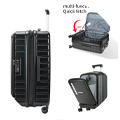
Carry-on luggage for short business trips
Shoppers often ask what is a carry on suitcase size or would search for a standard-size carry-on luggage. In actuality, not every airline has a universal rule. The most common dimensions for cabin bags are approximately 55 × 40 × 20 cm. That number is simply a generic foot peg. This does not ensure you get accepted for boarding. It is essential that users measure the bag at its furthest point. This measurement accounts for the wheels and solid handles. Then, they can compare the real height and width and depth (before/after) with what their policy requires you to do.
That’s why the question can I carry 24 inch luggage on board is needed to answer carefully. Usually, a 24-inch suitcase works best checked luggage. Taller or thicker than the cabin limits many times. Best for carrying a small bag on an overnight business trip. It makes its way through transit hubs, and slides into overhead bins with ease. A 24-inch makes more sense for multi day passageways. Assuming the carrier allows its packed size when checked as baggage.
Medium and large checked cases for longer journeys
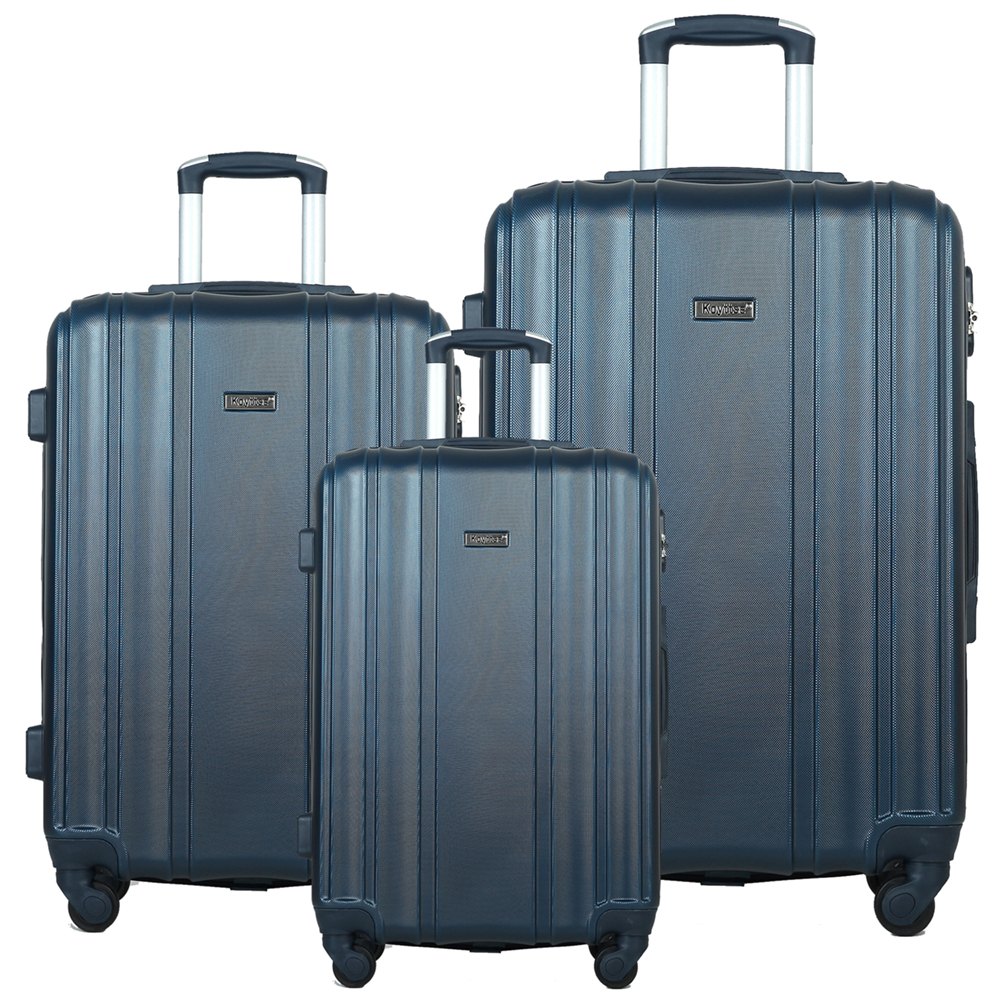
Medium trolley bag size is perfect for a trip of duration more than 1 day. Easily will hold a small suit, fine for business. It also appeals to someone who needs more room than a regular cabin bag but wants to avoid dragging an oversized suitcase. Bag names are everywhere, and honestly the market isn’t free from a bit of inconsistency. This includes displaying centimeters and inches, liter capacity, as well as the empty weight. The clear datapoints are still important to buyers so they can compare different materials and shapes.
A 28 suitcase could use nicely for a week-long holiday. This is a perfect trio for semi-to-full suitcase packing when you need to check luggage with your group. Buyers looking for comparison of 28 inch vs 32 inch luggage have to consider multiple factors. They have to consider stairwells and trunk space in cars, closet space at home — They also have to keep an eye on the weight and oversize limits of the airline. If you’re planning longer protection, or just need to store bulky items, the 32-inch is technically an option but offers a little more room. But tough to lift and easy to over pump it. Additional room only makes sense if the user can comfortably manage how they weight their bag.
Match material and components to real handling
It takes factories 25% more time and money to create a plastic suitcase than it does to manufacture cardboard. Then, when they do travel? They lean — hard — on the wheels, handles, zippers and pull rods of their bags. When goods hit the shelves, store buyers go through this same song and dance. An ultra-light case may sound spectacular on the paper. Instead, flimsy hardware or lackluster repair support can lead to expensive returns. A smart luggage strategy sees the main body and its parts as a cohesive functional unit.
Hard shell luggage and empty weight
A hard shell luggage attracts people who prefer a robust exterior and an easily cleanable surface. Plastics such as ABS, PC+ABS, polycarbonate and polypropylene 2 differ only in terms of their feel and weight. So it depends on the budget, number of travels and build quality to choose one as the best. Soft luggage offers flexible packing options and outside pockets for must-have items. Whereas a firm hard shell actually maintains its form. Ultimately, no one individual material will ever be able to guarantee complete protection.
It is a very real packing issue that leads to frequent internet searches for 24 inch suitcase weight. Not one of those kilograms spared by the unfilled case is accessible for garments gifting or work instruments, all under a firm fixed baggage remittance. For instance, a 4-wheeled wheeled suitcase is more likely to weigh less than one with only two wheels (even though heavier). There simply cannot be an unambiguous weight for each model of every single 24-inch case on the market. The measured sample weight, the outer dimensions and usable volume should be asked all together. Sure a few hundred grams saved might seem quite important at first. But it isn’t worth if that weight cut goes from key elements like suspension parts tasked to carry heavy loads or shield the wheels.
Luggage accessories and a loose handle
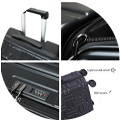
Items such as wheels, telescopic pull rods (including those that retract), top and side handles, locks / zippers, corner parts all greatly affect suitcase performance in the crowded airport terminal. An untightened screw might directly cause a luggage handle to become loose, requiring your immediate attention. Or it could be that the guide is worn, metal tubes are bent, or a badly damaged mounting point. Empty the case thoroughly and check the handle before traveling Gently tighten any available screws. Do not force a stuck button. Additionally, if the metal rails move suddenly when you are pulling a full case behind.
If someone asks how to fix a wobbly suitcase handle?, you must first check the source of the movement. See whether it is limited to a simple loose fastener or actually comes from a bent rail or cracked plastic base. The latter issue usually requires a fully compatible replacement part rather than a quick manual adjustment. Retailers can easily avoid repeated customer complaints by carefully recording the specific handle model, tube spacing, fixing points, and compatible parts. Our luggage accessories feature various component categories. Buyers can discuss these options for new manufacturing programs or future replacement needs.
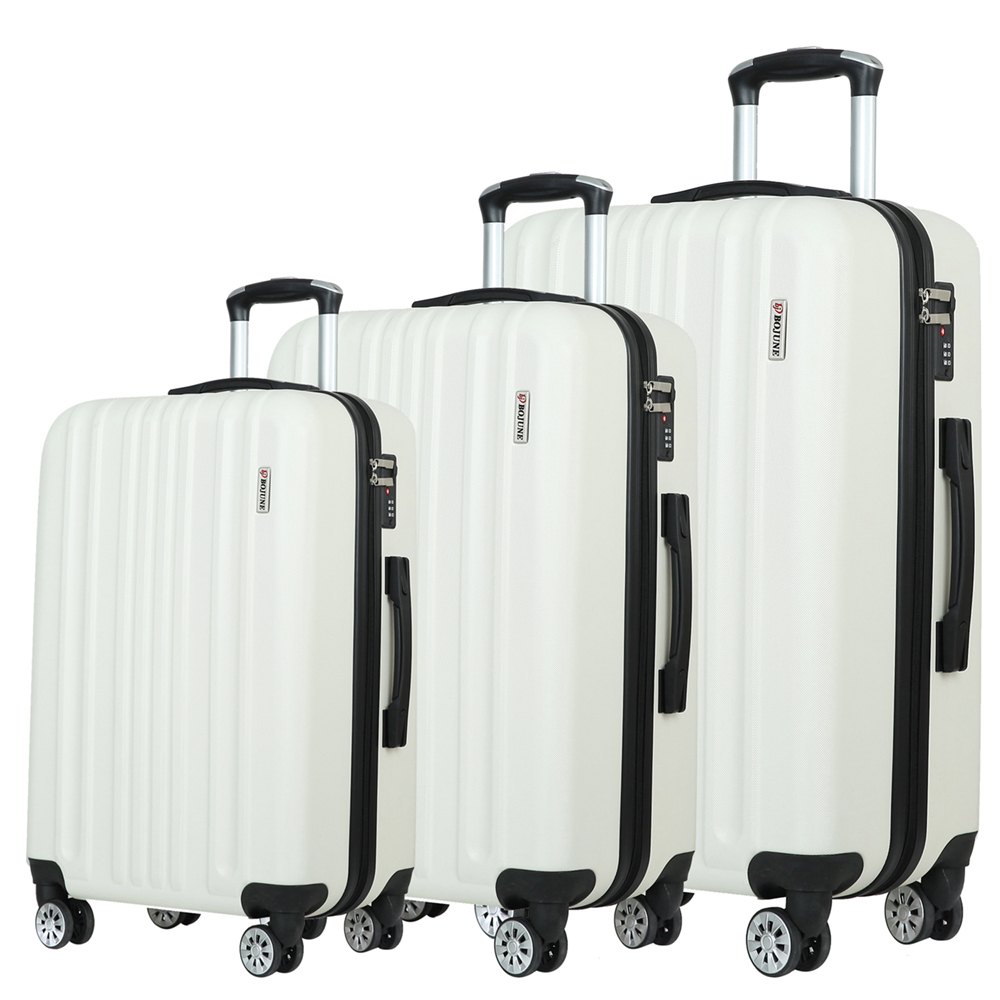
Make size details useful for shoppers and buyers
Product information is transparent and helps a traveler to pack with many fewer surprises. It provides a commercial buyer with uniform specifications for sampling and quality inspection. A suitcase size guide that is very practical should show both shoppers and customer-service teams how the measurements were taken. In order to accurately describe how you measure a suitcase size, it is imperative that the fully closed case is measured when at its absolute widest outer points. This equates to measuring the max from floor-to-top, side-to-side and front-to-back. Include the wheels, the fixed handles & any part sticking out off that inner shell. With a generic online listing, you need to represent the overall size both in centimeters and inches. Add liters of capacity, kilograms dry mass, the shell material and wheel layout plus exactly what’s in the box. That means shoppers have got a useful way of comparing the size for an individual bag against airline carry-on requirements. This standard ranges widely by carrier, and flight route. In the end, a properly sized table should aid in imaging an actual trip alongside of simply forcing the customer to decode some arbitrary number.
This exact information can then be used by wholesale and private-label teams to drive their entire product mix. Not to mention, an in-cabin case, a trolley bag and one or two totally openchecked choices will all cover completely different needs when you travel. Buyers need to first agree on a few things BEFORE beginning the sampling process. This consists of target customer, the main route/use case, shell finish and hardware fittings & packaging as well as quality inspection points. Where a new collection is based on wheels or handles that are common across the whole range, you need to check compatibility size by size. And never ever assume without checking that the parts will just fit.
At Pengteng, our dedicated service support can include in-depth design discussions and customized samples. It also covers rigorous quality checks and full shipping coordination. We additionally discuss specific OEM and ODM needs through our customization options. Buyers should always confirm the exact project scope, the sample timing, the MOQ, and the inspection plan. This must happen before placing any final production order. That initial conversation is far more useful when it starts with exact dimensions, chosen materials, and the target market. It should also cover the specific parts that end customers are most likely to use or replace.
Conclusion
The most useful luggage types are always the ones that perfectly fit a real journey. A compact carry-on can greatly simplify a short business trip. Meanwhile, a 24-inch case is usually much more practical as checked luggage. A 28-inch suitcase may nicely balance packing capacity and daily handling for a standard holiday. A larger 32-inch model serves longer stays quite well. However, it brings significantly more weight and movement concerns. Always measure the complete case and check the airline’s current limits. You should compare liters and kilograms rather than relying purely on a generic size name alone. For travel brands and retailers, clear specifications and suitable materials are vital. Tested accessories and an agreed inspection process strongly support a much better customer experience. At Pengteng, we seamlessly connect luggage, components, and custom service discussions. We do this to help buyers develop product ranges around how people actually travel today.
FAQs
Q: How much does a 24-inch suitcase weigh?
A: Many standard empty cases weigh about 3–4 kg. You should always confirm the specific model’s accurately measured weight.
Q: How many liters does a 28-inch suitcase hold?
A: It typically holds about 80–100 L. This volume largely depends on the overall shape, the depth, and the specific expansion design.
Q: Can I hand carry 24-inch luggage?
A: Usually, you cannot do this. Many 24-inch cases easily exceed standard cabin limits. Always check your operating airline’s current baggage rules.
 consult
 WHATSAPP
 leave message
 top