






Airline Bag Fees and Size Checks in 2026: A Luggage Sourcing Checklist That Cuts Returns
Flying today brings a frustrating problem. Airlines now look much closer at baggage size, overall weight, and extra fees. A bag sold as a "carry-on" might actually fail the airport sizer. This happens when staff count the wheels. Meanwhile, a fully packed large case might pass the weight limit long before you fill all its space. For sellers, these unexpected issues cause quick returns and bad buyer reviews.
Importers, wholesalers, and online shops need a better approach. The best solution is a product line designed for actual trips. It requires exact measurements and highly reliable hardware. At Pengteng, we link case size, outer material, and fittings together. We also focus on quality samples and good service as a trusted custom luggage manufacturer.
Why Size Checks Are Now a Product-Page Problem
There is no one size fits all for your luggage, as airlines have different standards. Instead, individual carriers impose their own particular shapes and sizes of the cabin. They set their own weight allowances, checked-bag fees and also extra fees. Beyond that, however, the fare rules can also change based on your specific flight route and ticket type. In addition, these rules will usually vary depending on the type of ticket and more importantly from where you are travelling.
For checked luggage, empty weight is a big deal. Any additional gram of plastic or fabric means less space for clothing in a suitcase. Make sure that external dimensions, precise weight and inner capacity is clearly indicated on retail product pages. They also need to clarify the purpose behind it. This is transparent data that answers the questions buyers have right before checkout. For a wholesale luggage supplier, these particular elements serve as the basis of pricing guide, sample-making and final quality inspection.
Build Each Size Around a Real Travel Scene
Peripheral inch labels are familiar to buyers. But wheels, fixed handles and expansion panels make for a different final physical shape. Also, deep pockets add extra bulk. The shape of the outer and internal fittings causes capacity shifts inwards. The true utility product range begins from the actual journey It then pairs the appropriate size and build to that individual journey. The difference is easy to notice at an explosion of crowds filling airport terminals and train stations. Of course, when you need a suitcase to fit into an extremely small shared hotel room then size matters.
Cabin Cases for Short Work Trips and Weekend Flights
There were few common questions asked by shoppers, one of which is what size a carry on suitcase actually should be. The majority of standard cabin models are approximately 20 inches long. Usually around 35-45 L of gear dependent on the bag. Still, many policies for each individual airline vary greatly. Always check your operating carrier before traveling. Equally, sellers must never employ a vague "airline approved" marketing statement.
You should also write in clear how to measure suitcase size. Use the outermost points of bag at all times Measure from the bottom of the wheels up to where ever it highest 2nd fixed point. After that, measure the biggest width and then write down where it’s deepest front. Include all handles, and that will be fully stuffed! The sizer at the airport checks only the total physical perimeter, not just plastic.
Medium Cases for a Week Away
Usually medium trolley bag size is accompany a checked luggage of approximately 24 inches. Size for a week-long holiday or standard business sales trip. It also suits two persons sharing the same bag for a short term break. The internal capacity usually maxes out near 60-75 L depending on the exact model.
Weight : The weight of the 24 inch suitcase plays a key role. The customer wants all the packing space They don’t want to drop that heavy empty weight on their airline allowance. Usually the dry weight is around 3.5-4.5 kg However, professional buyers have to be published with the established figure for each model. I only carry so much hand luggage for a long trip with Luggage in 24 inch Usually, you cannot. Its full height is far larger than most typical cabin limits.
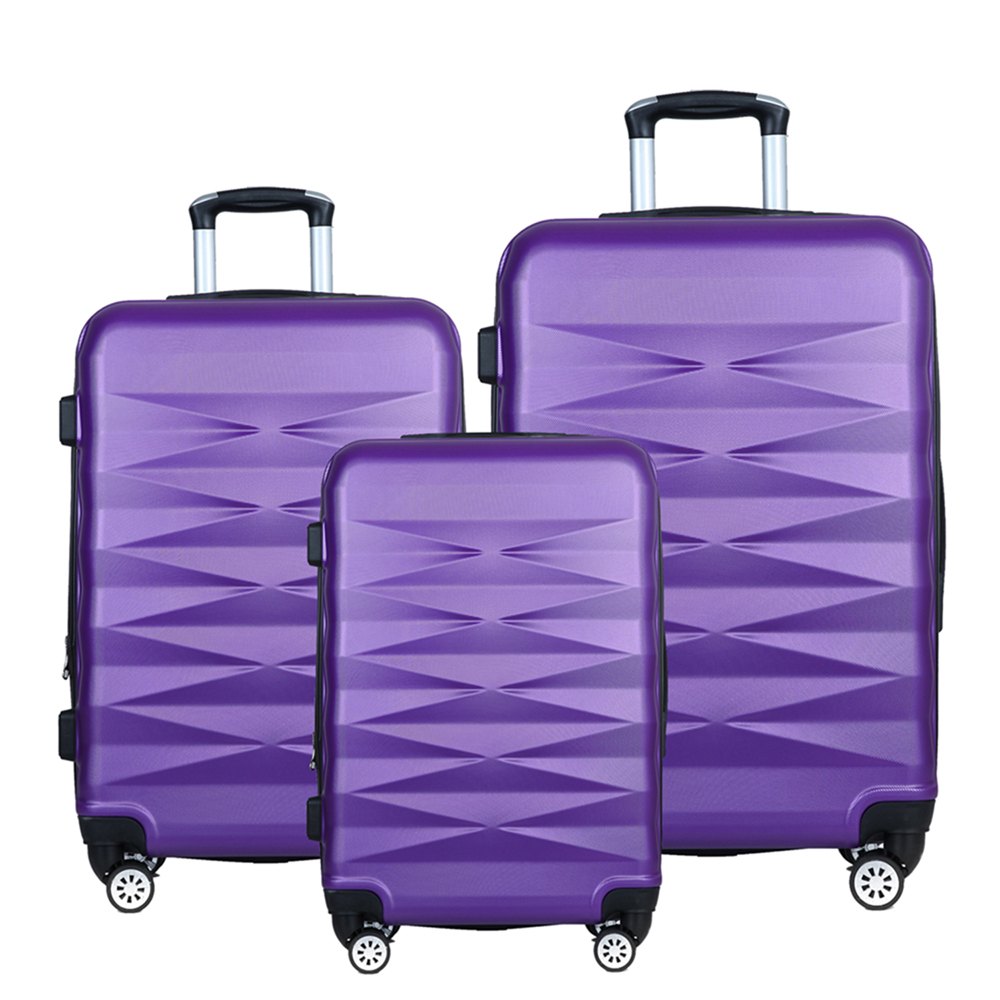
Our 20/24/28-inch ABS luggage set displays a very familiar size ladder. However, buyers should still verify the exact dimensions, total capacity, and empty weight. They should never rely just on simple inch labels.
Large Cases for Long Holidays, Families, and Relocation
The 28 inch vs 32 inch luggage debate becomes highly practical once you pack the bag. A 28 size suitcase easily holds clothes for a long holiday. It also stays fairly easy to lift and store at home. Conversely, a 32-inch case fits major house moves or very bulky family packing. However, travelers might hit a strict weight or oversize limit long before they use all that inner space.
Larger cases naturally put much more physical force on wheel housings. They also stress the handles, pull rods, and shipping cartons. A reliable OEM luggage factory must test these parts against a heavy packed load. For many retail sellers, 28 inches remains a very practical core size. The 32-inch option serves a much narrower market need. Therefore, it requires very clear weight guidance for the end user.
Treat Hardware as Part of the Return-Rate Plan
Modern luggage tests look closely at rough flights and bumpy pavements. They also check sharp turns and frequent heavy lifting. A beautiful outer finish cannot hide a loud wheel or a loose luggage handle. Proper hardware selection and spare-part planning must begin during early product development. You should never wait until angry complaints arrive. A bag used every single week suffers different wear compared to one used for two yearly trips. Therefore, you must evaluate the design against the buyer’s expected load and specific sales channel.
Pull Rods and Carry Handles Under Load
A telescopic pull rod requires some working clearance to slide. Because of this, a tiny bit of movement is not a real defect. However, a strong wobble or a broken lock is a major problem. A shifting base under a heavy load is also unacceptable. Professional buyers must always approve a fully loaded sample. They should also record the exact pull-rod specification for future customer service.
Many consumers search online for how to fix a wobbly suitcase handle? These users might have loose screws or badly worn guides. They could also have bent metal tubes or a cracked plastic mount. You can often tighten a simple accessible screw. Otherwise, you must replace a broken rail or base with a fully compatible part. Pengteng’s luggage accessories range provides strong handles, reliable pull rods, smooth wheels, and secure combination locks.
Wheels, Locks, Zippers, and Replaceable Parts
You must roll a heavily loaded sample over smooth tile and thick carpet. Test it over rough paving joints and door thresholds too. Carefully check the rolling noise, straight tracking, and the plastic wheel housing after making sharp turns. Open the main zippers while the bag is full. Then, set the combination lock several times. These physical checks reveal much more truth than just a nice appearance.
Private label luggage requires a detailed service map. You need to record each replaceable part’s specific model, item code, and color. Also note the exact mounting dimensions and the original supplier. If a wheel suddenly breaks, the support team can quickly find a perfect match. This saves them from asking the unhappy customer to throw away the whole case. Good repairability will significantly lower your total after-sales costs.
Match Materials to the Trip, Price, and Hardware
Outer material directly changes the bag’s weight, final shape, smooth finish, and retail price. However, internal construction matters just as much. The main shell thickness and the wheel mounts strongly impact the final result. Handle reinforcement, inner lining, and metal zippers also play huge roles. You should always compare complete, fully loaded samples. Do not judge ABS, PC+ABS, PP, PVC, or soft fabric merely by their material name. The smartest choice hits your target market price point. It does this without causing useless extra weight or future service headaches.
Hard-Shell Ranges for Retail and E-Commerce
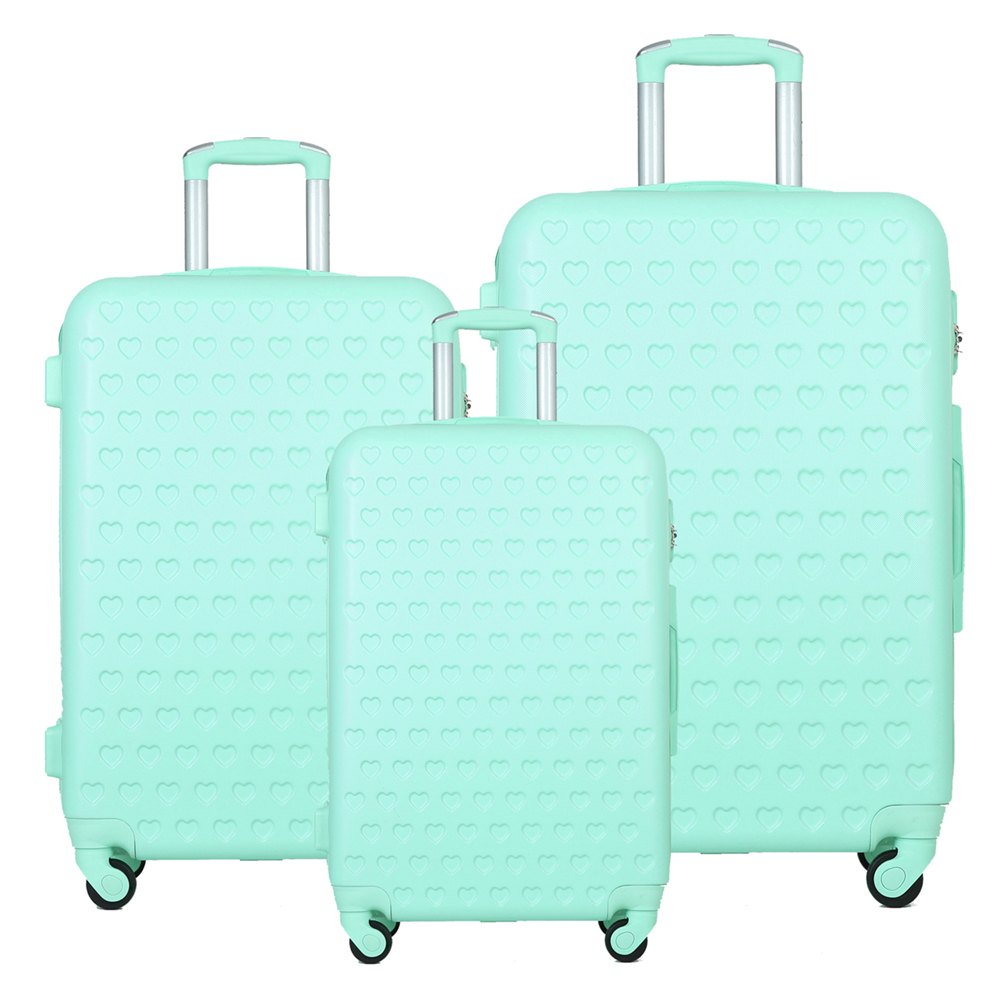
Hard-shell luggage stays very popular in 2026. It offers a firm structured body and many different surface finishes. Basic ABS material easily supports highly affordable price points. Meanwhile, a PC+ABS blend perfectly balances shell flexibility, premium appearance, and factory cost. Materials like PP, pure PC, and PVC all serve entirely different product market positions.
True lightweight luggage must never become fragile luggage. You should always ask the factory exactly where they removed those extra grams. A thinner revised inner lining might make perfect sense. On the other hand, terribly thin plastic wheel mounts will quickly break. Our luggage product selection allows professional buyers to compare distinct categories carefully. This helps them find the ideal match for their intended retail market.
Fabric Cases for Flexible Packing
Soft fabric luggage perfectly suits frequent business travel and long road trips. In these situations, quick-access outside pockets really help the user. Always check the outer fabric density and the tough thread stitching. Inspect the zippers, corner reinforcement, and front pocket depth. A totally full front pocket greatly changes the bag’s overall physical depth. Because of this, you must clearly state if your published measurements reflect a totally empty or a fully packed case.
Using shared wheels or identical handles can greatly simplify factory purchasing. It also makes keeping spare stock much easier across different bag sizes. However, this strategy only works when the heavy load and mounting needs perfectly match. A nice consistent visual look certainly helps sales. Even so, correct mechanical engineering matters much more in the end.
Turn the Brief Into a Repeatable Buying Standard
A detailed buyer’s brief must directly connect daily customer questions with strict factory checks. Pengteng’s ODM/OEM support fully covers new custom development. Furthermore, our clear service process deeply supports early design and complex project discussions. A solid written checklist helps your merchandising staff, the factory workers, and the technical support teams. It ensures everyone makes choices from the exact same technical specification.
Before you approve any massive bulk production, you must carefully record:
the full external dimensions, the exact empty weight in kg, and the true inner capacity in L;
the specific target traveler, the expected trip length, and the intended cabin or checked use;
the outer material, inner lining, metal zippers, secure lock, smooth wheels, tough handles, pull rod, and all included accessories;
the final approved color, brand logo, printed labels, shipping carton, and the tested loaded-sample movement;
the accurate spare-part codes and the clear after-sales service responsibility;
the vital inspection points for raw materials, factory assembly, finished goods, and final packing.
You must carry these hard facts directly into your official sample records and quality inspections. Add them to your online product listings and customer service guides too. Using shared dimensions and standard part names greatly reduces mismatched marketing claims. It also prevents highly avoidable product returns.
Conclusion
Strict airline fees and harsh size checks have turned basic luggage specifications into a massive customer-service issue. Retail sellers desperately need complete dimensions and verified kilograms. They also need accurate useful liters and a very clear trip use for every single case. A standard 24-inch model is almost always checked luggage. Meanwhile, a huge 32-inch case might easily hit airline weight or oversize limits long before it is completely full. Moving parts like wheels, pull rods, handles, locks, and zippers strongly shape buyer reviews. They also dictate future repair costs. At Pengteng, we carefully connect early size planning, raw materials, and physical samples. We also handle private-label details and vital replacement parts. This comprehensive approach helps professional buyers build product ranges that are much easier to sell and support. Buyers can easily lower business friction by using one strict standard across all product pages, sample approvals, and spare-part records. Finally, travelers should always check their specific airline before any departure. This step remains especially crucial when one single itinerary includes multiple different flight carriers.
FAQs
Q: What is a typical 24 inch suitcase weight and capacity?
A: It usually weighs about 3.5-4.5 kg. It offers roughly 60-75 L of inner room. This amount totally depends on the specific outer shell and the heavy metal hardware used.
Q: Can I hand carry 24 inch luggage?
A: Usually, the answer is no. It is generally a large 60-75 L checked case. You must always confirm the airline’s current maximum dimensions.
Q: What size is a carry on suitcase?
A: It often measures about 20 inches tall. It provides approximately 35-45 L of space. Typical airline weight allowances commonly range around 7-10 kg for these smaller bags.
 consult
 WHATSAPP
 leave message
 top