




Gate-Checked Carry-Ons: Why Airline-Approved Bags Still Get Taken at Boarding
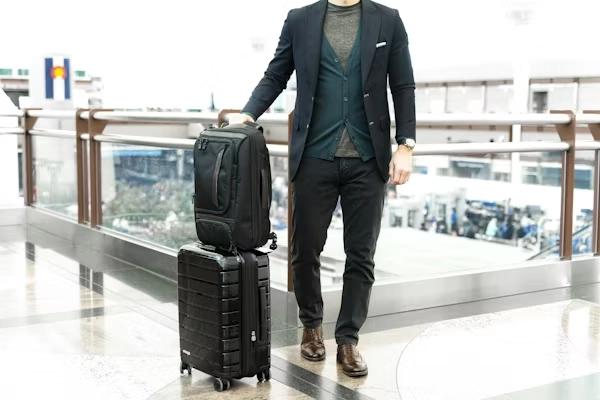
For millions of travelers around the world flying has become an everyday business. Despite aircraft offering space for carry-on luggage and airlines specifying clear dimensions and weight in advance, more and more pieces of hand luggage are being gate-checked by boarding gate staff.
Why Gate-Checked Carry-Ons Happen
Gate-checking of approved bags occurs for reasons other than size or weight. Sometimes the overhead bins are crowded. Other times it’s because of the type of aircraft or even the boarding sequence policy.
Aircraft Size and Cabin Storage
The overhead storage space on smaller aircraft, like regional jets, are very limited in size. Even perfectly dimensioned carry-on luggage won’t fit. In such cases the earlier arriving passenger will get to stow his luggage first and later arriving passengers will have to gate-check their luggage. Our Pengteng lightweight cabin luggage is very slim and can perfectly be stowed under the passenger’s in front of him and thus prevent gate-checking.
Boarding Sequence and Passenger Load
As previously mentioned, passengers are boarded in groups or zones. As those with priority boarding tend to store their overhead space closest to their seat, those boarding later may find themselves having to store their bag in less convenient locations. Even if your luggage is of a size that would normally be considered to be carry-on only, by the time you are called to board, it may be too late and items may be gate-checked in order to keep the boarding process running smoothly. Smaller luggage or even better an expandable Pengteng spinner luggage can make a big difference when it comes to boarding at busier times.
Gate-Checked Bags: How Airlines Decide
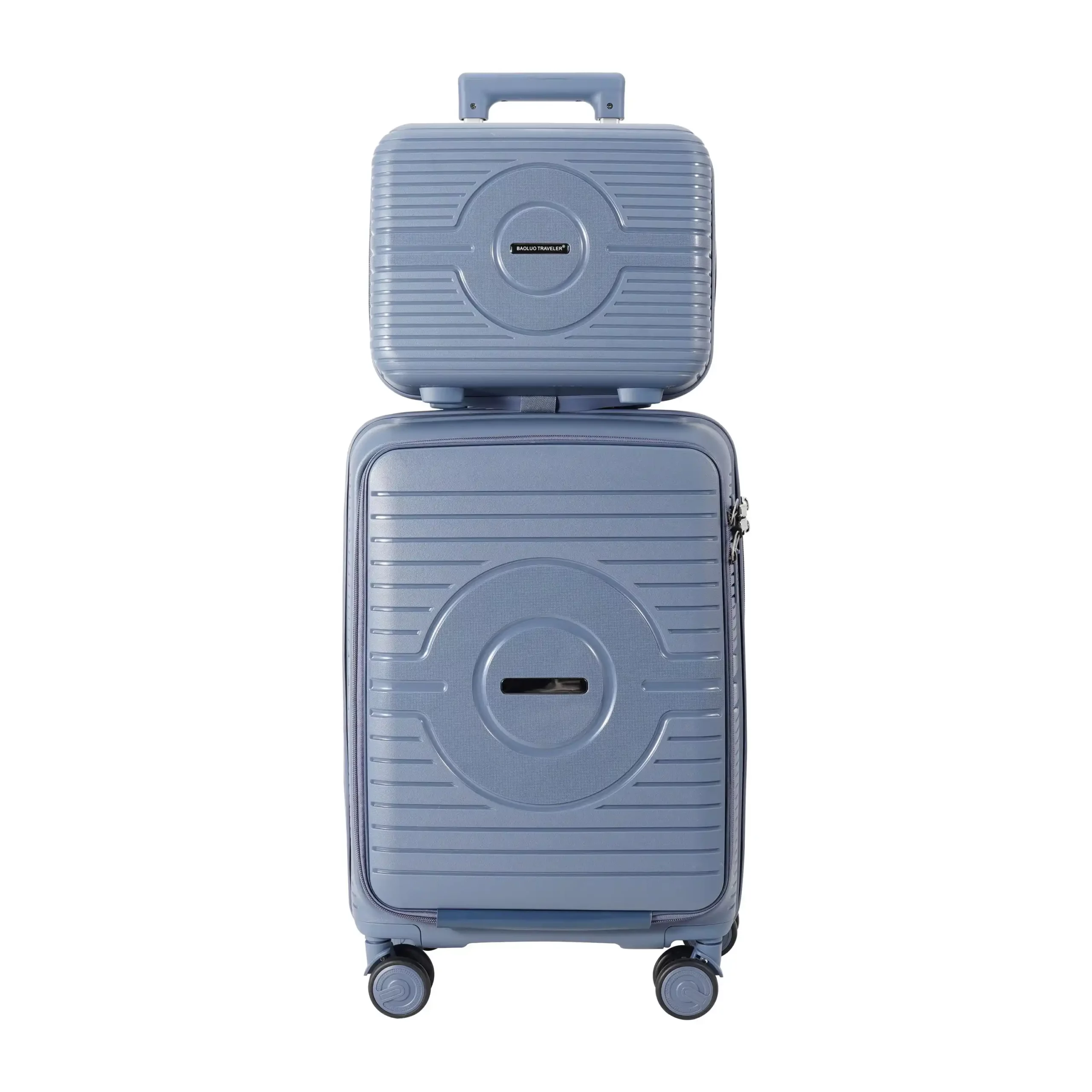
Gate-checking bags are often left to the last minute as part of an airline’s operational gate-activity. For example, even if an aircraft’s overhead stowage is completely capacity for “standard” sized cabin bags, airline staff may choose to have passengers gate-check their bags if they happen to bring all of their allowed sized bags with them. Thus, choosing bags that are highly flexible, lightweight, and easily maneuverable are crucial. Our Pengteng 3-piece luggage set provides an excellent distribution of gear to the various bags, to minimize stress to any single piece.
Choosing Airline-Approved Luggage Wisely
Choosing the perfect cabin luggage is more than just measuring its dimensions. You also have to consider the material, weight, mobility as well as the internal organization. All of this will determine whether your luggage stays in the cabin with you or has to be gate checked.
Weight and Material Considerations
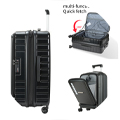
Our hard shell carry-on luggage by Pengteng is heavy-duty, yet lightweight and allows for greater flexibility at the gate. Our luggage is within this weight limit, and is easy for flight attendants to stuff in overhead bins.
Organizational Features
When traveling, it is always best to use a bag of suitable size with separate parts or compartments to get the most out of your luggage and to easily access any items that you need in a hurry. Within these compartments there are often many internal pockets as well as various other features, such as straps to compress the luggage and removable organizers to pack. With these characteristics in our Pengteng cabin luggage, travelers can avoid having to check in a bag at the gate.
Dimensions and Expandable Options
Standard carry-on bags follow general specifications of 22 x 14 x 9 inches in the U.S. However, the travel bag made by Pengteng is an expandable luggage. This means that you can have it to grow in size as needed to hold more items, and then shrink back down to fit in the overhead bin space on your plane when it is not as large. This feature can be very beneficial, as you will see when you are traveling on different planes with different amounts of overhead space.
Strategies to Reduce Gate-Checking Risks
While gate-checking is unpredictable, there are ways to prevent it from happening.
Early Boarding and Priority Access
Boarding the flight earlier can help to secure more space in the overhead storage bins. Look into the airlines’ early boarding options or the airline’s priority boarding service, when available. Also, there are many smaller and more nimble luggage options on the market such as the Pengteng lightweight carry-on bags that fit perfectly under the seat in front of you. These will also provide you with the extra security that you are looking for.
Select Smaller or Slim Bags
It’s less likely for your slim bag to be gate checked. As luggage fills up on a flight, it can become unclear whether items will fit in the overhead bins or get to stow in the underseat storage in front of you before it gets gate checked. Our Pengteng soft-shell cabin luggage are designed to just fit in the overhead or underseat in front of you, and will provide plenty of room inside the bag for all of your clothing, etc.
Pack Smartly
Pack essentials such as change of clothes, etc. in efficient manner to avoid overstuffing of luggage. Very heavy or very large luggage takes a long time to maneuver around airports and may need to be gate-checked. Use of packing cubes or compression bags are helpful in distributing the items in luggage and also in maintaining the shape of luggage to avoid being put in overhead bin.
Understand Airline Policies
Airline policies for gate-checking are often detailed and contain nuances specific to each airline. This information can be especially important to know on a very full flight, or one with only small regional jets, and can also include information about the size and weight of your carry-on, as well as items that are prohibited from being gate-checked in addition to checked baggage.
Overhead Bin Space and Cabin Flow
The physical limitations of the aircraft cabin play a huge role in the gate-checking of luggage. Overhead bin space is limited, and even the approved size for airline luggage can be too large to put in the overhead bin when many passengers are boarding at the same time. The best luggage for the aircraft cabin is one that is small, made to be efficient in use, and can be put in the overhead bin in the best possible location.
Practical Tips for Maximizing Space
-
Place heavier items at the bottom of the bag to stabilize the load.
-
Use soft items or compressible materials on top to allow minor adjustments.
-
Avoid protruding handles or wheels that can catch on other luggage.
Pengteng luggages are designed with these factors in mind, and so are more likely to remain with you in the cabin.
The Role of Bag Shape and Mobility
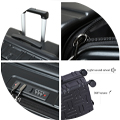
Most people prefer to take bags that can be pulled as a roll or slide into the bin as opposed to inflexible items that are of an unusual shape. Spinner wheels and pull handles that collapse up into the bag are ideal for easy mobility. Our Pengteng spinner luggage comes with 360° roller wheels and a long telescopic handle that makes stowage in the overhead space easy and is likely to be put in the hold rather than gate checked.
Travel Scenarios Where Gate-Checking Is Common
Even with perfect luggage selection, sometimes gate-checking occurs.
-
Fully booked flights where cabin space is limited
-
Regional jets with smaller overhead bins
-
Late boarding due to connection delays or group boarding
By knowing these possible scenarios in advance you will be able to better prepare yourself for your trip and adapt when necessary.
Conclusion
Choosing a well-designed piece of luggage can go a long way in minimizing the chances that a piece of luggage will have to be gate checked. If one considers the weight of a bag, the external dimensions of a bag, and the organizational features of a bag, it is possible to select a piece of luggage that will make boarding the plane as easy as possible and will help to protect one’s belongings while traveling. Our Pengteng brand carry-on luggage and cabin size luggage are well-designed pieces of luggage that are durable, compliant with airline size requirements, and convenient to use. As such, they are ideal for the frequent flyer who wants to be prepared for any circumstance while at the same time being as comfortable as possible while traveling.
FAQs
Q: What are airline-approved bags?
A: 22×14×9 inches, lightweight, TSA approved locks.
Q: Is it possible that even carry-on luggage stored at the gate can be damaged?
A: Although it is unlikely, at busy gates there is always a chance of damage. The hard shell of our luggage does reduce the risk of damage.
Q: How much does a typical carry-on bag weigh?
A: Typically up to 7–10 kg. Our lightweight Pengteng carry-on luggage weigh less than 8 kg.
 consult
 WHATSAPP
 leave message
 top
top