





Luggage Sizes and Materials Explained: Carry-On Rules, ABS vs PP, and Buying Trends

Picking out luggage involves much more than just looking at colors or styles today. People traveling now look closely at dimensions, weight, fabrics, wheels, locks, and packing room. On the business side, retail buyers must think about how long products last. They also need to review order flexibility, packing methods, and what their customers actually want.
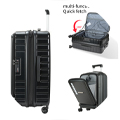
At Pengteng, we treat luggage as a full travel solution. Our main product line features ABS luggage, PP luggage, PC+ABS luggage, fabric luggage, and luggage accessories. We also offer customized suitcase choices. You might be getting ready for a quick business trip. Or, you could be putting together a wholesale catalog. Either way, picking the proper size and build really matters.
Luggage Sizes and Their Main Uses
Luggage size directly changes how much you can pack. It also impacts shipping costs and airline approval. A bag might seem easy to use in your bedroom. However, it can become very hard to manage at a busy airport once filled. Because of this, you must measure the entire bag. This includes checking the wheels and the handles.
Before we talk about bag materials, we should look at how standard sizes work during actual trips. People usually link small cases with quick visits and airplane cabins. Meanwhile, medium and large bags give you extra space. This extra room holds more clothes, shoes, and gear for the whole family. Still, the dimensions alone do not control how well a bag performs. The overall weight and the wheel quality are just as crucial.
18 Inch vs 20 Inch Luggage
The biggest difference between 18 inch vs 20 inch luggage involves inner packing space and trip flexibility.
An 18-inch case works wonderfully for simple overnight stays and light business trips. It also suits people who pack very lightly. The smaller frame is quite simple to slide into tight spots. Even so, the total space inside remains fairly restricted.
A 20-inch suitcase generally provides a nicer balance for brief holidays and work trips. It stores more garments without getting too heavy to hold. For most flyers, a 20-inch case acts as a highly practical carry-on luggage size. Regardless, you still must verify specific airline rules before you leave for the airport.
24 Inch Suitcase Weight and Capacity
Travelers frequently pick a 24-inch suitcase for medium-length journeys. It delivers much more room than a basic cabin bag. At the same time, it stays easier to push around than a massive checked bag.
When looking at 24 inch suitcase weight, shoppers need to check the empty bag weight. They should not just focus on the final weight after packing. A lighter outer shell leaves extra allowance for your personal goods under strict airline weight limits. Furthermore, the build of the wheels, handles, zippers, and inside dividers strongly impacts your overall trip experience.
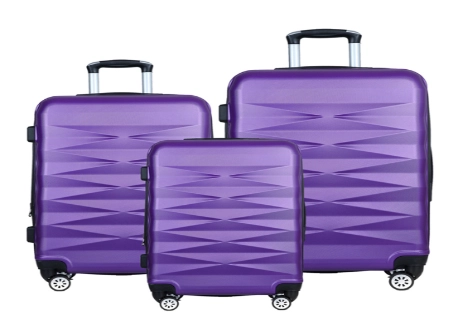
Our 20/24/28-inch ABS luggage set hands retailers multiple size choices within a single matching group. This set features quiet spinner wheels and a safe lock design. It also uses strong ABS construction for daily travel needs.
28 Inch vs 32 Inch Luggage
Deciding between 28 inch vs 32 inch luggage relies heavily on your trip length. It also depends on your packing habits and basic transport conditions.
A 28-inch suitcase fits well for extended vacations and checked airline travel. It serves people who have moderate space requirements perfectly. This bag is normally quite simple to lift, pack away, and roll through busy train stations.
A 32-inch suitcase brings massive capacity. Yet, it can get overly heavy once completely filled. It might also struggle to fit inside standard car trunks or small hotel closets. Moving it down narrow hallways can be tough. For most folks, a 28-inch case feels much easier to handle. You should only step up to the larger size if maximum capacity is your top goal.
Carry-On Luggage: Size Matters More Than Labels
A lot of travelers ask, “what size is a carry on suitcase?” We do not have one single global answer for this. Different airlines apply very different rules. A standard reference size sits around 56 × 45 × 25 cm. This measurement must include the wheels and the handles. Still, your exact limit can change based on the specific airline, your ticket class, and the airplane model.
This explains why a bag labeled as “20-inch luggage” gets accepted on one flight but turned away on the next. The product tag acts merely as a rough guide. Travelers must always verify the full outside dimensions prior to packing their things.
Can a 24 in Suitcase Be a Carry On?
The common question “can a 24 in suitcase be a carry on” normally gets a very simple reply. In almost all situations, it runs too big for standard cabin rules. A 24-inch suitcase functions much better as regular checked luggage.
Certain flyers sometimes confuse the bare shell height with the true external size. The wheels, top handles, and corner guards add real bulk to the final dimensions. For safe and easy cabin use, a correctly measured 18-inch or 20-inch case almost always proves more appropriate.
ABS or PP Luggage Better?
The question “abs or pp luggage better” does not have one answer for every traveler or retailer. Each material has different strengths.
ABS luggage is popular because it can provide a hard shell, a clean appearance, and competitive pricing. It is often suitable for fashion-focused collections, promotional luggage, entry-level products, and wholesale programs.
PP luggage is known for its light weight and flexible structure. It can be a strong option for travelers who want to reduce empty-case weight. PP may also fit product lines that focus on simple design, practical use, and material efficiency.
The better choice depends on your market position:
-
Choose ABS luggage when appearance, cost control, and broad product variety are priorities.
-
Consider PP luggage when low weight, flexibility, and daily travel use are more important.
-
Consider PC+ABS luggage when you want a balance between shell performance and price.
-
Always compare the full construction, including wheels, corners, locks, zippers, and internal lining.
Pengteng supplies several luggage materials and can support different market requirements through custom luggage and OEM/ODM service. This allows buyers to discuss shell materials, logo placement, packaging, colors, and product details in one process.
Functional Features That Improve Travel
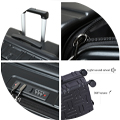
Modern luggage buyers are looking for useful features rather than decoration alone. Silent wheels, stable pull rods, organized interiors, TSA-style lock designs, and expandable structures can make a suitcase easier to use.
Why a Suitcase with Brakes Can Be Useful
A suitcase with brakes can be helpful in crowded airports, train stations, hotel lobbies, and sloped streets. A brake system may prevent the case from rolling away while the traveler is checking documents, using a phone, or waiting in line.
For retailers, suitcase with brakes products can create a clear selling point because the benefit is easy to understand. The feature is especially relevant for business travelers, older users, parents, and people moving through busy public spaces.
Other details also deserve attention:
-
Four-wheel spinner systems for easier direction changes.
-
Quiet wheels for smoother movement across indoor floors.
-
Strong telescopic handles with less side-to-side movement.
-
Separate compartments for clothing, shoes, and small accessories.
-
Scratch-resistant surfaces for frequent travel.
-
Expandable sections for flexible packing capacity.
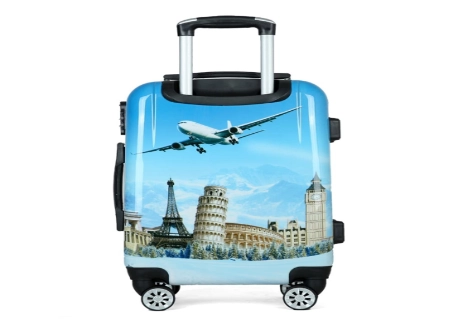
Our 4-wheel spinner ABS luggage set combines three common sizes with silent universal wheels and a security lock design.
ABS Luggage Wholesale for Growing Brands
For importers and retailers, abs luggage wholesale is not only about receiving a low unit price. A reliable wholesale program should also cover samples, quality checks, packaging, delivery, and communication.
Before placing an order, buyers should review:
-
Minimum order quantity and size assortment.
-
Sample development time and sample approval process.
-
Shell material and thickness.
-
Wheel, handle, zipper, and lock quality.
-
Logo printing, color, packaging, and carton requirements.
-
Inspection standards before shipment.
-
Shipping options for small batches and full container orders.
Pengteng supports customized logos, packaging, and graphic design for selected luggage sets. Our service also includes customized samples, production inspection, and international shipping support. Buyers can visit our luggage product catalog to review current categories and product directions.
Conclusion
Luggage selection is becoming more practical and more detailed. Travelers want the right size, lower empty weight, quiet wheels, safe storage, and useful features for real journeys. Retail buyers want flexible collections, stable quality, clear product differences, and reliable support from their suppliers.
The best luggage solution depends on the travel scenario. An 18-inch or 20-inch suitcase may suit short trips, while a 24-inch or 28-inch case can offer more space for checked travel. ABS and PP luggage each have their own advantages, and features such as a suitcase with brakes can add real value. At Pengteng, we help partners develop luggage products that balance design, function, and business needs.
FAQs
Q: What size is a carry on suitcase?
A: A common reference is about 56 × 45 × 25 cm, but always check the airline’s current rules.
Q: Can a 24 in suitcase be a carry on?
A: Usually no. A 24-inch suitcase is commonly used as checked luggage.
Q: ABS or PP luggage better?
A: ABS suits cost-conscious designs, while PP is often lighter and more flexible.
 consult
 WHATSAPP
 leave message
 top
top