




PC+ABS vs. ABS vs. PP Luggage: Which Material Is Best?
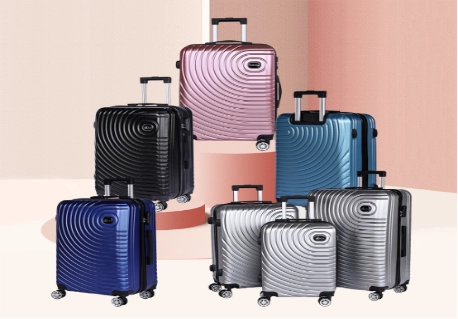
Choosing a luggage bag often starts with size, color, and price. Yet shell material has a greater effect on performance after repeated flights, rough transfers, and long storage. Lightweight luggage may save packing weight. But a weak shell can crack. A tough case may last longer. Yet it can cost more or look less refined.
This guide compares PC+ABS luggage, ABS luggage, and PP luggage for travelers, retailers, importers, and private-label buyers seeking the best luggage material for a real market. At Pengteng, we develop hard shell luggage for different price levels, travel habits, and sales channels.
Why Luggage Material Matters More Today?
Travelers now pay close attention to cabin size, empty case weight, baggage fees, and shell damage. Many airlines use carry-on limits near 56 × 45 × 25 cm. Weight rules may begin at 5 kg. A durable luggage bag must protect packed items. It must do this without using too much of the allowance.
Material also affects returns and customer reviews. Cracked corners, deep dents, fading, broken wheels, and unstable handles are common complaints. The best luggage material should match travel frequency, handling conditions, and price expectations. Our luggage product range covers several materials and sizes for these needs.
Quick Comparison: PC+ABS vs. ABS vs. PP
No material wins every category. PC+ABS balances appearance, impact resistance, and price. ABS suits cost-focused collections and occasional travel. PP is known for flexibility and repeated impact performance. Finished quality still depends on shell thickness, molding, wheels, handles, and inspection.
|
Material |
Main Strength |
Main Limitation |
Price Level |
Best For |
|
PC+ABS |
Balanced toughness and finish |
Quality varies by construction |
Mid-range |
Frequent leisure and business travel |
|
ABS |
Low cost and easy styling |
Higher crack risk under severe impact |
Entry-level |
Occasional trips and promotional ranges |
|
PP |
Flexible and impact resistant |
May feel less premium |
Mid-range |
Checked luggage and frequent handling |
A useful rule is simple. Choose PC+ABS for balance. Choose ABS for price. Choose PP for hard use. Still, a thick, well-molded ABS shell may perform better than a thin, poorly made composite shell.
PC+ABS Luggage: The Balanced Choice
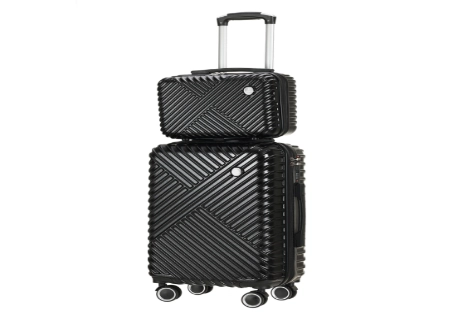
PC+ABS luggage combines polycarbonate and ABS in a composite shell. Many products use ABS for shape and cost control. A PC layer improves surface quality and impact behavior. Construction differs by factory and price point. Buyers should ask about thickness, layers, finish, and testing. They should not trust the label alone.
Main Advantages of PC+ABS Luggage
PC+ABS is often the best luggage material for buyers who want a strong retail story without a premium price. It can offer several clear benefits.
- Better impact resistance than basic ABS
- A smoother, more premium-looking surface
- Good color and texture choices
- A practical balance between weight and strength
- Broad appeal for business and holiday travel
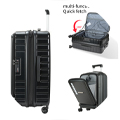
Our PC+ABS luggage collection includes carry-on and checked sizes. These models come with options such as TSA locks, silent wheels, expandable structures, and scratch-resistant textures.
Limits to Consider
Not all PC+ABS luggage is equal. A thin PC layer may improve appearance more than strength. Glossy surfaces can show scratches more clearly than textured shells. Drop tests, wheel mileage tests, handle pull tests, and loaded-case tests tell sourcing teams more than a material label.
PC+ABS is a strong choice for mid-range luggage bag collections. This is especially true when customers travel several times a year. They expect style with dependable protection.
ABS Luggage: Best for Budget-Controlled Collections
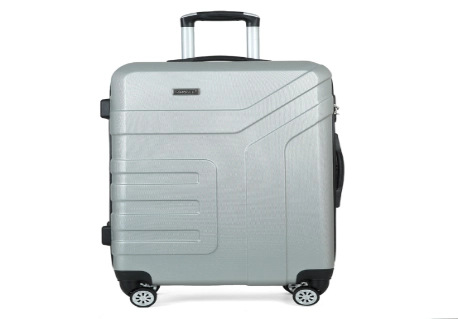
ABS is common because it is easy to mold, easy to color, and cost-friendly. It works well for luggage sets, seasonal designs, children’s cases, promotional products, and entry-level retail. Its rigid surface supports many patterns and finishes. This helps buyers build a broad range without a high starting cost.
Where ABS Performs Well
ABS luggage can be light, attractive, and affordable. It is suitable for several uses.
- Weekend trips and short holidays
- Carry-on cases kept with the traveler
- First-time luggage buyers
- Three-piece sets at accessible prices
- Retail programs needing many colors
Pengteng offers ABS luggage in common 20-, 24-, and 28-inch formats. These include spinner wheels, organizer sections, makeup cases, custom logos, and TSA lock options.
Where ABS Has Limits
ABS is more rigid and usually less forgiving than PP under repeated heavy impact. Cold conditions, sharp pressure points, thin corners, or overpacking can raise crack risk. It may also show stress marks after rough handling.
This does not make ABS a poor material. For occasional travelers and price-sensitive markets, good ABS luggage offers strong value. For weekly flights or heavy checked baggage, PC+ABS or PP is often a safer recommendation.
PP Luggage: Built for Flexibility and Repeated Impact
Polypropylene, or PP, can flex under pressure and return closer to its original form. This makes PP luggage attractive for checked baggage, family travel, and long-distance trips. PP also has low material density. Final luggage weight depends on shell thickness, frame, lining, wheels, and hardware.
Main Advantages of PP Luggage
PP luggage is often chosen for durability rather than a glossy finish. Key benefits include these points.
- Strong resistance to repeated impacts
- Flexibility that lowers brittle cracking risk
- Good resistance to moisture
- Long service potential with reliable hardware
- Strong value for frequent travelers
Our PP luggage range includes 20-, 24-, and 28-inch options. These have front-opening pockets, computer compartments, spinner wheels, and anti-collision designs.
Limits to Consider
A flexible PP shell can feel softer when pressed. Some shoppers may mistake this for weakness. Molded ribs can improve stiffness. But they also define the product’s look. PP surfaces may appear less glossy than some PC+ABS finishes.
For buyers, the key question is whether the complete luggage bag survives loaded use. It must do so without permanent deformation, wheel failure, zipper damage, or loose handles.
Which Material Is Best for Your Travel Style?
The best luggage material depends on the customer and trip. Consider these examples.
- Frequent business traveler: PC+ABS for a polished look, manageable weight, and balanced durability.
- Occasional holiday traveler: ABS for lower cost and broad design choice.
- Frequent checked-bag user: PP for flexible impact resistance.
- Family or student market: ABS or PP, based on budget and handling.
- Private-label retailer: PC+ABS as a mid-range hero product, supported by ABS entry models and PP durability models.
Smart features are another buying point. But removable-battery design matters for air travel. A luggage bag with charging or tracking functions should allow quick battery removal when required. Baggage with lithium batteries normally needs to remain in the cabin unless the battery is removed.
What Buyers Should Check Beyond the Shell?
Material is only one part of a durable luggage bag. Before choosing a product or supplier, check these points.
- Shell thickness and corners: Thin corners fail before broad panels.
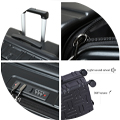
- Wheel structure: Quiet spinning helps, but housing strength matters more.
- Trolley handle fit: Too much movement can cause early wear.
- Zipper or frame construction: The opening must match the expected load.
- Loaded testing: Test realistic weight, not only an empty case.
- After-sales support: Clear sample, inspection, shipping, and replacement terms reduce risk.
At Pengteng, we support material selection, style development, color, logo, size, sampling, production, inspection, and shipping through our OEM/ODM process and customer service support. This helps buyers build a luggage collection around real customer needs.
Conclusion
PC+ABS, ABS, and PP can all be the best luggage material when matched with the right traveler, price point, and product structure. PC+ABS balances appearance, impact resistance, and cost. It is suitable for many mid-range collections. ABS is practical for entry-level luggage, occasional trips, colorful sets, and promotional programs. PP offers flexible impact performance. It is a strong option for checked luggage or frequent handling.
The final decision should not depend on the material name alone. Shell thickness, corners, wheels, handles, locks, zippers, lining, and loaded testing all affect the life of a luggage bag. At Pengteng, we help buyers compare these details. We also develop products for clear market needs.
FAQs
Q: What capacity is best for carry-on luggage?
A: Choose 35–45 L, usually under 3.5 kg empty, subject to airline rules.
Q: Which is the best luggage material for a 23 kg checked bag?
A: PP or quality PC+ABS suits 65–100 L checked luggage with frequent handling.
Q: Is ABS luggage suitable for a 20 kg trip?
A: Yes, for occasional travel. Choose reinforced corners and keep total weight within 20 kg.
 consult
 WHATSAPP
 leave message
 top
top