





How to Choose Luggage Accessories and Planar Material for Different Suitcase Sizes
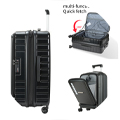
Any suitcase relies entirely on its supporting parts. Wheels move the heavy load. Handles guide the motion. Locks keep personal items safe. The outer shell forms the basic shape. However, selecting the right flat material plays a big role. It decides the final weight and overall strength. It also affects the outer surface and market value.
By 2026, travelers care much more about carry-on limits. They also watch checked baggage rules and total bag weight very closely. Different airlines set distinct rules. Furthermore, many standard size guides count wheels and handles as part of the total external dimensions. Because of this, picking the right accessories and materials matters a lot. It is vital for everyday travelers. It is equally crucial for professional luggage buyers.
At Pengteng, we guide brands and wholesale buyers. We assist them in picking the best materials and suitcase hardware. We also help them find the right sizes and product mixes for various global markets.
Why Luggage Accessories Should Match Suitcase Size
A small carry-on suitcase deals with different physical stress than a large checked case. People lift carry-on luggage quite often. They frequently push these bags into tight overhead bins. On the other hand, large luggage holds much more weight. It often goes through rougher handling during transit. Therefore, the attached accessories need to fit these specific conditions perfectly.
Small suitcases need light and compact hardware
When looking at 18-inch, 20-inch, and some 22-inch suitcases, every single gram counts. A bulky handle takes away from the allowed packing weight. An oversized wheel system does the same thing. Using compact accessories solves this problem. They help build a lighter suitcase overall. This makes the bag much easier to pull across busy airports and crowded city streets.
Small luggage should usually include:
-
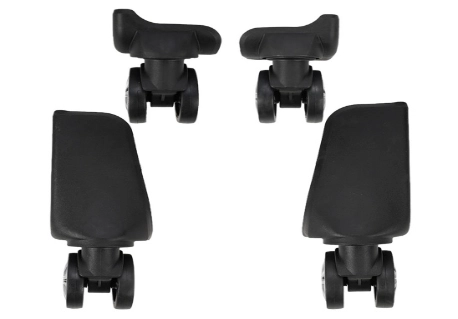
Lightweight spinner wheels
-
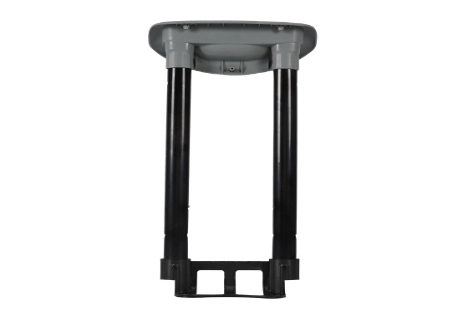
A compact telescopic luggage handle
-
A stable but light pull rod
-
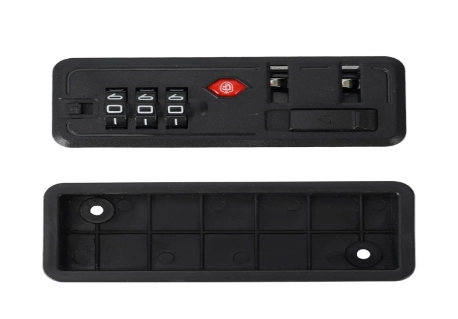
A simple combination lock
-
Smooth zippers with low resistance
When customers ask, “what size suitcase can you carry on a plane,” the answer depends on the airline. A common reference is around 22 × 18 × 10 inches, including wheels and handles, but travelers should always check the specific carrier’s rule.
Medium suitcases need balance
A 24-inch case is often used for medium-length trips. It needs more strength than a carry-on, but it should not become unnecessarily heavy. A typical 24 inch suitcase weight may be around 3.5-4.5 kg, depending on the material, lining, wheels, and pull rod.
The 24 inch maleta size usually offers about 60-70 L of packing space. It can suit five-to-seven-day trips, business travel, or customers who need more room than a cabin case provides.
Large suitcases need stronger support
A 28 inches bag is generally a large checked suitcase. It may provide about 80-100 L of capacity and carry around 20-25 kg, depending on the airline and packing style. Because the case becomes heavier when full, the wheel base, handle, corners, and shell structure must work together.
For large trolley bag sizes, weak accessories can create serious problems. A loose pull rod or unstable wheel may make the entire suitcase uncomfortable to use.
How Planar Material Affects Luggage Performance
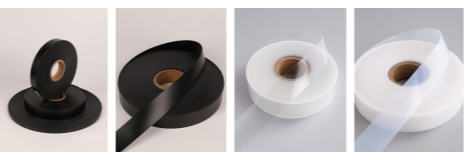
Planar material refers to flat sheet or panel material used to form or support a suitcase structure. It influences how the case holds its shape, how much it weighs, and how the surface looks after repeated travel. For luggage brands, material is not only a manufacturing decision. It also affects the product’s price, target customer, and sales message.
Pengteng’s product range covers fabric luggage, PC+ABS luggage, ABS luggage, PVC luggage, PP luggage, and luggage accessories. This variety allows buyers to choose different material paths for different customers and sales channels.
Fabric luggage for flexible travel
Fabric luggage is suitable for customers who prefer flexible packing and outside pockets. It can work well for business trips, weekend travel, and travelers who need quick access to documents or small items.
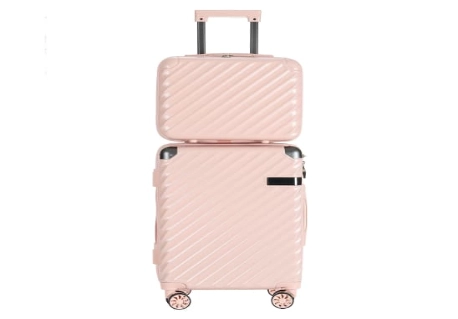
A suitcase set fabric collection can also be useful for retail buyers. A 20 24 28 inch luggage set gives customers a clear choice:
-
20 inch for short trips
-
24 inch for medium travel
-
28 inch for longer trips
Fabric luggage is often easier to store and may offer expandable sections. However, buyers should also check the fabric surface, stitching, zipper quality, and water-resistant treatment.
ABS luggage for value-focused collections
ABS luggage is often used for entry-level and price-sensitive product lines. It can support clean shapes, different colors, and attractive retail presentation. A textured surface may also help hide small marks better than a highly glossy finish.
For buyers interested in scratch proof luggage, it is important to look beyond the material name. Surface texture, shell thickness, corner structure, and hardware quality all influence how well a suitcase handles daily wear.
PC+ABS luggage for balanced product lines
PC+ABS luggage is often selected when a brand wants to balance appearance, impact resistance, and cost. It can be positioned above basic value luggage while remaining suitable for a wide customer group.
This material can work well for:
-
Modern carry-on collections
-
Business travel luggage
-
Medium checked cases
-
Retail suitcase sets
-
Products requiring a smoother, more structured appearance
PP luggage for flexibility and impact resistance
PP luggage is a practical choice for customers who value light weight and flexibility. It can be useful for repeated travel, family trips, and checked luggage. Its final performance depends on shell thickness, molding design, wheel structure, and other luggage accessories.
For a large suitcase, PP can provide a useful balance between flexibility and durability. The product should still be tested with its actual hardware and realistic packed weight.
PVC luggage for easy care
PVC luggage can suit buyers who want a practical surface that is easy to clean and simple to maintain. It can be used for value-focused collections and travel products that need a clear everyday-use benefit.
PVC luggage is not automatically the right choice for every market. Buyers should consider surface finish, weight, structure, zippers, handles, and the expected travel environment before placing a bulk order.
The Most Important Luggage Accessories to Check
Accessory quality directly affects customer satisfaction. A suitcase that rolls smoothly and feels stable is easier to recommend. A suitcase with weak hardware may receive complaints even when the shell itself performs well.
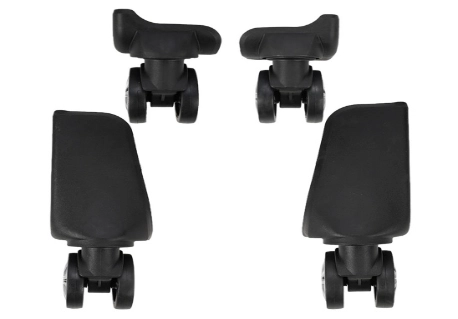
Suitcase wheels
When selecting suitcase wheels, buyers should check:
-
Smooth movement on hard floors
-
Stability under realistic weight
-
Low noise
-
Strong attachment to the case
-
Resistance to wear
-
Replacement convenience
The wheels for a 20-inch suitcase do not need the same load capacity as the wheels for a 28 inches bag. Matching the wheel system to the suitcase size can improve both comfort and product life.
Telescopic luggage handle
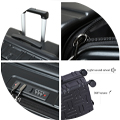
A telescopic luggage handle should extend smoothly and lock at different heights. It should not shake excessively when the suitcase is full. Large cases need stronger pull rods because they create more pulling force during movement.
Brands searching for a custom luggage manufacturer should ask how handles are matched with different shell sizes. A good handle should fit the case structure instead of being treated as a standard part for every model.
Locks, zippers, and corner protection
Locks add confidence. Zippers protect the opening. Corner protection helps reduce damage during handling. These components are especially important for checked luggage, which can face more pressure than a carry-on suitcase.
Pengteng provides luggage and related accessories for buyers who need complete product solutions. Through our service page, buyers can learn more about product development and support.
How Are Suitcases Measured?
Many travelers ask, “how are suitcases measured?” The correct method is to measure the full external dimensions. This normally includes the wheels, handles, side grips, and other parts that extend beyond the shell.
Measuring a suitcase correctly
Measure the following:
-
Height from the floor to the top of the case
-
Width across the widest side
-
Depth from front to back
-
Total linear size for checked luggage
A suitcase may look compact when only the shell is measured, but large wheels or a thick handle can change the final dimensions. This is particularly important when planning carry-on products.
Some checked baggage systems use a total size close to 158 cm for length, width, and height combined, while weight allowances often use 23 kg as a common reference. The exact requirements remain airline and route specific.
How Pengteng Supports Custom Luggage Buyers
Pengteng works with brands, wholesalers, importers, and travel product businesses. Our luggage range includes fabric luggage, PC+ABS luggage, ABS luggage, PVC luggage, PP luggage, and luggage accessories. This allows buyers to build a collection instead of choosing only one material.
Through our OEM/ODM service, we support material selection, size planning, logo placement, colors, wheels, handles, locks, lining, packaging, and product set development. Pengteng has also published guidance on creating luggage that suits airline-focused travel products and different market needs.
For buyers planning a new collection, a useful structure is:
-
One compact carry-on model
-
One medium 24-inch suitcase
-
One large 28-inch suitcase
-
Matching luggage accessories
-
A material and color system across the collection
This gives customers a clearer choice and helps retailers manage different travel needs.
Conclusion
The right luggage accessories and planar material can change the quality, comfort, and market value of a suitcase. Small cases need light hardware. Medium cases need balance. Large checked luggage needs stronger wheels, handles, corners, and shell support. Fabric luggage offers flexibility, ABS luggage supports value-focused collections, PC+ABS luggage balances performance and appearance, PP luggage offers flexibility, and PVC luggage provides practical easy-care value. At Pengteng, we help buyers connect these material and accessory choices with suitable suitcase sizes, product sets, and customization plans.
FAQs
Q: What is the average 24 inch suitcase weight?
A: Usually 3.5-4.5 kg.
Q: What is the 24 inch maleta size capacity?
A: About 60-70 L.
Q: Is a 28 inches bag suitable for checked travel?
A: Yes, usually 80-100 L.
 consult
 WHATSAPP
 leave message
 top
top