





Fabric Luggage vs ABS Luggage vs PP Luggage: Which Material Fits Your Market Best?
In 2026, travel buyers focus on far more than just style. They need a suitcase that feels light. It must look clean and survive frequent trips. It also needs to fit airline rules easily. This explains why fabric luggage, ABS luggage, and PP luggage consistently appear in product searches. They also drive buying decisions today.
For brands and wholesalers, the main question remains simple. Which material fits your specific market? Which one matches your price band? You also must consider your customers’ travel habits. At Pengteng, we build our product lines around these specific questions. You can view our full products page. You might also explore our service page. Alternatively, review our OEM/ODM page to see how we support various luggage projects.
Why Material Choice Matters More in 2026
The travel market moves much faster today. Airlines enforce cabin size limits strictly. Buyers worry heavily about extra baggage fees. Shoppers also compare luggage by weight and overall durability. They want to know how easy the bag is to use daily. Material choice directly impacts all these factors.
Airline rules push buyers toward lighter and clearer products
A carry-on suitcase represents more than just a small bag today. It must fit strict airline limits. It needs to roll smoothly. It also must stay under tight weight controls. Many airlines use a standard carry-on reference of roughly 56 x 45 x 25 cm. This measurement includes wheels and handles. Therefore, trolley bag sizes matter deeply. A suitcase might look great. However, if it measures too large, it creates a terrible travel experience. This problem happens before the trip even begins.
Buyers now compare use, not just appearance
Modern customers ask highly practical questions:
- Will the surface scratch too easily?
- Is the bag light enough for weekly travel?
- Does this model work better as a carry-on or a checked bag?
- Is it suitable for business travel, family trips, or retail sets?
This explains why scratch proof luggage, weight, and size all form part of a single buying decision.
B2B buyers need a clear product story
Brands, importers, and wholesalers know one truth. A single suitcase should never try to serve everyone. A well-defined product line works much better. Fabric luggage can answer one specific need. ABS luggage serves another demand. Meanwhile, PP luggage handles a third requirement. A simple product story makes the final sale much easier.
How Fabric Luggage, ABS Luggage, and PP Luggage Differ
These three materials serve very different types of travelers. No single option is perfect for every situation. However, each material holds a strong place in the market when applied correctly.
You should think about the customer first before choosing a model. Does the buyer want a soft, flexible case for shorter trips? Do they need a hard shell suitcase with a neat finish for retail shelves? Perhaps they seek a highly impact-resistant option for checked travel. The answer to these questions usually points to the right material.
Fabric luggage: flexible, practical, and easy to pack
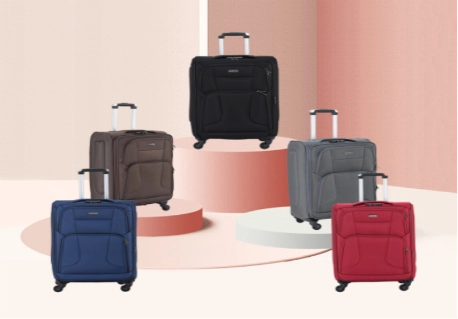
Fabric luggage remains a solid choice for certain travelers. These users prefer exterior pockets, expansion zippers, and a softer feel. This style works exceptionally well for short trips and business use. It also suits people who value easy organization. The outer fabric often feels more forgiving than a rigid hard shell. Furthermore, the inside layout is usually quite simple to use.
This material proves highly useful when:
- the traveler actively wants front pockets
- the bag requires a more flexible shape
- the target market values light handling
- the product will serve short or medium trips
Fabric luggage can also be a smart option for brands. It appeals to companies seeking a classic visual style. The material can support decent water resistance with the right surface treatment. This feature greatly improves daily use.
ABS luggage: clean shape and strong retail appeal
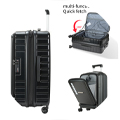
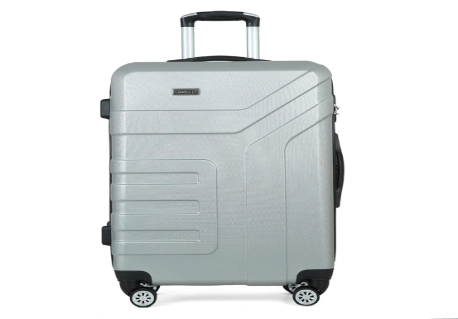
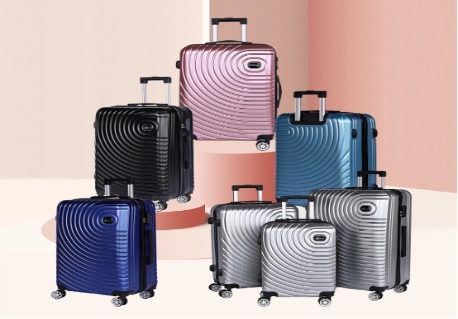
Buyers often choose ABS luggage for its cost-friendly structure. They also appreciate its neat visual appeal. This material works wonderfully in sets. It helps brands achieve a clean shelf presence. It also provides strong color options. Many buyers find ABS very easy to understand and sell.
Textured ABS usually performs better than a glossy shell for scratch proof luggage. The textured surface hides small marks much more easily. This trait does not make the bag indestructible. However, it certainly helps the suitcase look better after normal travel wear.
ABS luggage frequently serves as a great fit for:
- entry-level product collections
- standard three-piece luggage sets
- various promotional products
- travelers who desire a clean and simple shell
PP luggage: flexible, light, and built for repeated use
PP luggage has grown increasingly popular recently. It balances light weight and overall durability exceptionally well. The outer shell can flex safely under heavy pressure. It then returns to its original shape better than brittle materials. This flexibility makes it a wonderful fit for checked travel. It also suits family use and frequent repeat flyers perfectly.
PP luggage often works best when buyers want:
- better impact resistance
- a lighter hard shell
- less cracking risk during travel
- a practical mid-to-higher-end feel
For brands, PP can also be a strong answer when customers ask for durable travel luggage without moving into a very expensive range.
How Size Changes the Best Material Choice
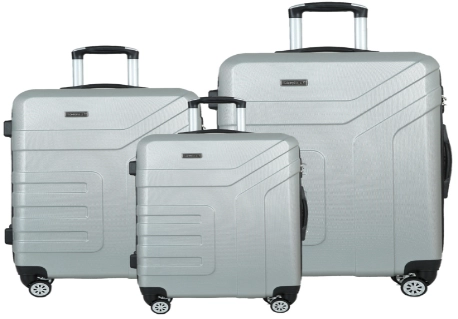
Material and size go together. A carry-on case, a medium suitcase, and a large checked bag all face different travel pressures. That is why people search not only for material names, but also for trolley bag sizes, how are suitcases measured, and what size is a carry-on suitcase.
When size and material match, the suitcase feels easier to use and easier to sell.
What size is a carry-on suitcase?
A standard carry-on suitcase measures roughly 20 to 22 inches. However, airline rules frequently differ. Many passengers need a bag that fits inside overhead bins. They also want a case that rolls easily across airport floors. In this category, lightweight fabric luggage works nicely. Compact ABS luggage also performs quite well.
When a shopper asks what size is a carry-on suitcase, the response must mention airline limits. Outer dimensions hold the most importance. Shell size alone is not enough. Wheels and handles definitely count in the total measurement.
24 inch maleta size and 22 inches luggage capacity in kg
A 24 inch maleta size represents a clever choice for mid-length journeys. People often pick this option for vacations lasting five to seven days. A bag of this scale gives about 60 to 70 liters of interior room. This volume changes slightly based on the specific shape.
Regarding 22 inches luggage capacity in kg, many bags hold roughly 10 to 15 kilograms of packed items. This total depends on the outer shell, the wheels, the top handle, and current flight restrictions. Here, PP luggage looks very appealing. Customers want a solid case that remains stable during actual trips.
28 inch luggage is medium or large?
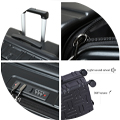
In most retail sectors, people ask if 28 inch luggage is medium or large? The correct answer is normally large. Makers build this size for extended vacations. It suits family packing needs and checked baggage requirements. A big suitcase demands a tougher frame. It needs better wheels. It also requires a pull handle that stays firm when the bag gets heavy.
For this dimension, PP luggage functions perfectly. Certain fabric luggage styles also fit the job well. The right choice depends on your target audience. Large ABS cases sell nicely too. This happens especially when a company wants to offer a budget-friendly line.
How are suitcases measured?
How are suitcases measured? The most basic method adds height, width, and depth together. This calculation must include the wheels and handles. For airlines, the external bulk matters much more than just the main shell. Because of this rule, a bag might look small on a store shelf. Yet, it can break cabin limits if the bottom wheels or top handle stick out too far.
For companies, exact size details stop buyer confusion. For shoppers, accurate numbers lower return rates and stop bad reviews.
How Pengteng Helps Buyers Build the Right Collection
At Pengteng, we view luggage as a broad system rather than just one basic item. We guide buyers to create a product range. This range must match distinct markets and retail paths. This strategy might include fabric luggage for softside fans. It could mean ABS luggage for affordable sets. It might also involve PP luggage for tough daily handling.
You can check our case center to notice how we back various product paths. Please use our contact page to talk about your upcoming plan. Our homepage shows a fast overview of our brand. Meanwhile, our service team handles product creation, quality testing, and delivery advice.
For B2B clients, the most effective plan normally includes:
- one material for basic entry-level items
- one material for middle-tier retail stores
- one material for high-end or lasting needs
This method provides a direct way to arrange a neat collection. It helps you sell with higher confidence.
Conclusion
Fabric luggage, ABS luggage, and PP luggage each fix a unique travel problem. Fabric luggage stays handy and adapts easily. ABS luggage looks neat and saves money. PP luggage feels light but remains tough for frequent trips. The ideal pick relies on the local market. It depends on the bag size and the user’s travel style. For labels and bulk sellers, the main task is not grabbing the top-selling material. Instead, the goal is picking what suits the end user perfectly. At Pengteng, we assist buyers in forming that choice. We offer product variety, custom design help, and a smooth OEM/ODM path. When the material, dimensions, and purpose all match up, the suitcase becomes incredibly simple to sell.
FAQs
Q: What size is a carry-on suitcase?
A: Usually 20-22 inches, about 35-50 L.
Q: What is 22 inches luggage capacity in kg?
A: Usually around 10-15 kg.
Q: Is 28 inch luggage medium or large?
A: Usually large, about 80-100 L.
 consult
 WHATSAPP
 leave message
 top
top