






Standard Luggage Size for Airlines: What Buyers Need to Know About 20 24 28 and 32 Inch Suitcases
Airline baggage rules have become a daily question for travelers and a business question for luggage buyers. Shoppers search what size is a carry on suitcase, compare 24 inch suitcase weight, and ask whether a 28 size suitcase is too large for family trips. Retailers, importers, and private label sellers feel the same pressure from another side. They need products that are easy to explain, easy to ship, and less likely to create returns. At Pengteng, we build luggage for these real decisions, not just for showroom photos.
This guide looks at standard luggage size for airlines through the lens of buyers who balance capacity, weight, wheel performance, material choice, and OEM luggage plans. It explains where 20, 24, 28, and 32 inch suitcases fit in current travel habits, including tighter cabin checks and demand for smart details such as a suitcase with brakes.
Why Standard Luggage Size for Airlines Still Drives Search Demand
The hardest luggage question is actually quite basic. Will the bag clear the airline counter? Will it pass the cabin gate? The correct answer shifts based on the airline and the specific route. It also depends on the fare type. Another major factor is whether the suitcase is measured with its wheels and handles attached. Because of these variables, standard luggage size for airlines stays a highly popular topic. This knowledge helps travelers dodge unexpected fees. Furthermore, it allows sellers to cut down on unclear product claims.
Carry-On Expectations Are Tighter Than Many Shoppers Think
People frequently search for what size is a carry on suitcase online. The right answer normally starts at 20 inches. It is not 24 inches. A 20 inch case works very well for quick trips. It suits business travel and cabin-focused buyers perfectly. However, the final choice must always match the specific size rule of the carrier.
This detail is vital for retail product pages. A seller needs to state the complete outside dimensions. They should never just list the main shell height. Clear text explaining how to measure a suitcase size is highly useful. It lets shoppers easily check the height, width, and depth. Buyers can also review the total linear measurement prior to making a purchase.
Checked Luggage Is Becoming More Size-Specific
Travelers eventually switch from small cabin bags to larger checked luggage. During this process, they frequently look at 24 inch, 28 inch, and 32 inch options. A medium trolley bag size is quite popular today. It is ideal for a trip lasting five to seven days. Meanwhile, a 28 size suitcase fits much longer vacations. It is also a great choice for family packing. A 32 inch case holds a lot more gear. Still, keeping that large bag under strict weight limits becomes a tough task.
This situation makes proper product range planning crucial for sellers. Our luggage products feature all the common travel sizes. This broad selection includes matching sets. These sets allow buyers to present a complete good-better-best retail display within a single collection.
20 24 28 Inch Luggage and the Role of Each Size
The phrase 20 24 28 inch luggage works well because it mirrors how many shoppers think. They do not start with technical drawings. They start with trip length, airline pressure, and the amount of clothing they want to pack. A clear size ladder makes the purchase easier, especially for online stores where customers cannot place the bags side by side.
20 Inch: Cabin-Focused and Fast-Moving
A 20 inch suitcase usually targets short business trips, weekend travel, students, and people who prefer not to wait at baggage claim. It should feel light, roll quietly, and use interior space carefully. Spinner wheels and a stable trolley system are more important than buyers sometimes realize, because a small case is moved often and lifted often.
24 Inch: The Medium Case With the Most Questions
A 24 inch suitcase sits in the middle. It has enough room for longer trips, but many shoppers still ask: can i hand carry 24 inch luggage? In most cases, the safer answer is no. It is normally treated as checked luggage. A typical 24 inch suitcase weight may sit around 3.5 to 4.5 kg depending on shell material, wheels, handle system, lining, and locks.
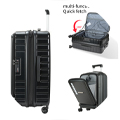
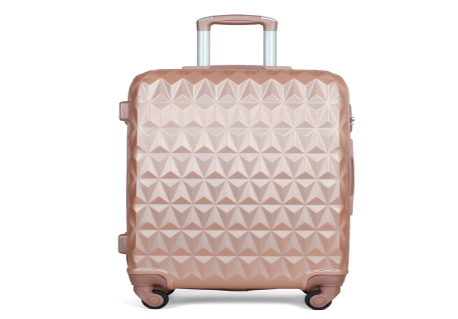
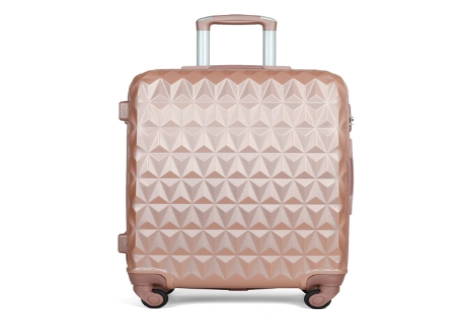
Pengteng’s 24 inch hard shell options, including this ABS trolley suitcase, are useful for buyers who want a practical medium trolley bag size for mainstream travel demand.
28 Inch vs 32 Inch Luggage: Capacity Is Not the Only Issue
The search 28 inch vs 32 inch luggage is usually driven by a fear of buying too small or too large. A 28 inch suitcase is often the safer retail choice for long trips because it offers strong capacity without becoming too difficult to move. A 32 inch suitcase gives extra packing room, but filled volume can quickly turn into excess baggage weight.
This is why the best product description should not only say large. It should explain target use, expected capacity, and weight discipline. A large case also needs stronger corners, smooth zippers, good wheel housing, and a trolley handle that does not wobble when heavy. For families, students moving abroad, or long-stay travelers, the 28 size suitcase often becomes the core checked model.
Wheel Control and Braking Features Are Gaining Attention
Airports, train stations, hotel ramps, and cruise terminals have made rolling control more visible. A suitcase with brakes can help stop the case from drifting on slopes or moving floors. For B2B buyers, this is a useful upgrade story because it is easy for shoppers to understand. It also separates a higher-value SKU from a basic four-wheel model without changing the whole collection.
OEM Luggage Buyers Need More Than a Size Chart
Size content attracts search traffic, but B2B buyers need deeper support before placing an order. They care about custom colors, logo methods, MOQ, sample lead time, carton packing, material stability, accessory life, and whether the manufacturer can keep repeated orders consistent. This is especially true for private label sellers, e-commerce stores, wholesalers, and travel-goods retailers.
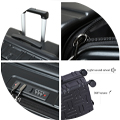
Our OEM and ODM service supports custom luggage development, sample work, production follow-up, quality inspection, packaging, and shipping coordination. We focus on practical details such as shell material, trolley tubes, spinner wheels, lock choice, handle feel, lining, zipper direction, carton strength, and production consistency.
Hard Shell Materials Should Match the Price Band
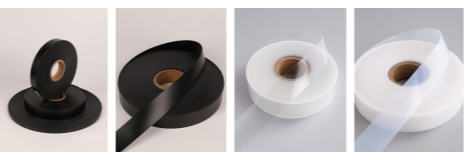
Material choice is part of both marketing and after-sales control. ABS can support value-driven collections with many color choices. PP is often considered for stronger impact resistance and a lighter feel in some designs. PC or PC-blend luggage can serve higher price bands where buyers expect a more flexible shell and a cleaner surface finish. The right answer depends on the sales channel, target price, and return-risk tolerance.
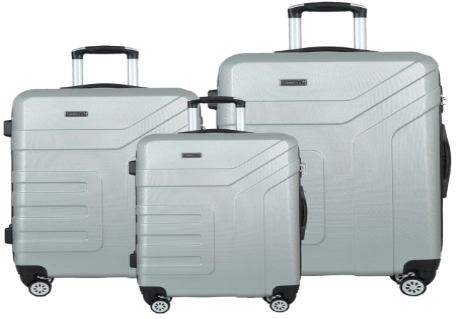
For example, our 20 24 28 inch luggage set gives wholesalers and online sellers a simple family of sizes for coordinated listings and bundle sales.
Product Pages Should Answer Real Buyer Pain Points
A strong luggage page should answer the question before the buyer asks customer service. Dimensions should include wheels and handles. Capacity should be shown in liters when possible. Weight should be clear in kilograms. For a 24 inch suitcase weight claim, give a realistic range tied to material and accessory configuration.
The same idea applies to B2B content. Instead of only saying high quality, a page can mention drop testing, wheel rolling checks, trolley pull testing, lock checks, zipper smoothness, color consistency, and carton packing. These details speak to daily problems: late samples, weak wheels, unclear carton data, and products that look good online but fail in use.
• Use total external dimensions when explaining standard luggage size for airlines.
• Show liters and kilograms beside inch size, especially for medium trolley bag size and 28 size suitcase pages.
• Separate cabin-friendly, medium checked, and large checked luggage in product navigation.
• Add accessory details for wheels, handles, locks, zippers, corner guards, and brake options.
• For OEM luggage, state logo, color, sample, inspection, packaging, and delivery support clearly.
Where Pengteng Fits in the Luggage Supply Chain
Pengteng serves buyers who need luggage that can be sold with confidence. We do not treat a suitcase as only a shell with wheels. Every part affects the final customer experience: lifting weight, spinner sound, handle grip, zipper turning, and carton protection before the product reaches the warehouse.
For buyers planning new collections, our OEM ODM manufacturer suitcase set options can support private label sales, promotional channels, travel retail, and online product lines. We can help turn search demand around standard luggage size for airlines into clearer products, cleaner listings, and fewer avoidable questions from shoppers.
Conclusion
Standard luggage size for airlines is more than a travel rule. It shapes what shoppers search, what retailers stock, and what OEM luggage buyers request from factories. A 20 inch case supports cabin travel, a 24 inch case fits medium checked use, a 28 size suitcase covers longer trips, and a 32 inch model serves heavy packing with more caution around weight. Product pages should explain dimensions, liters, kilograms, materials, wheels, locks, and brake options in plain language. At Pengteng, we build our products and services around these practical questions, helping buyers create luggage lines that are easier to sell and easier for travelers to trust.
FAQs
Q: What is a normal 24 inch suitcase weight?
A: About 3.5-4.5 kg, with 60-70 L capacity.
Q: Can I hand carry 24 inch luggage?
A: Usually no. It is normally checked luggage, around 60-70 L.
Q: What capacity is common for a 28 size suitcase?
A: Often 90-110 L, depending on shell depth and expansion.
 consult
 WHATSAPP
 leave message
 top
top